


Rotel Michi Q5 CD transport and DAC
Receiving any CD player for review in 2025 is a relatively unusual experience. Even though the death of CD is rather overstated, it might be fair to say that the format is enjoying a graceful decline. When I think about the players that I have received in recent years, they have either been compact and affordable or standalone transports intended to make use of your existing decoding device.
The Rotel Michi Q5 is neither of these things. Even when Rotel describes it as a ‘CD transport and DAC’ this is a minor point of obtuseness in a much larger serving of bloody mindedness that makes up this rather unusual device. In both design and execution, it treads a path meaningfully and intriguingly different to any other CD player I have tested in recent years.
Warm white light
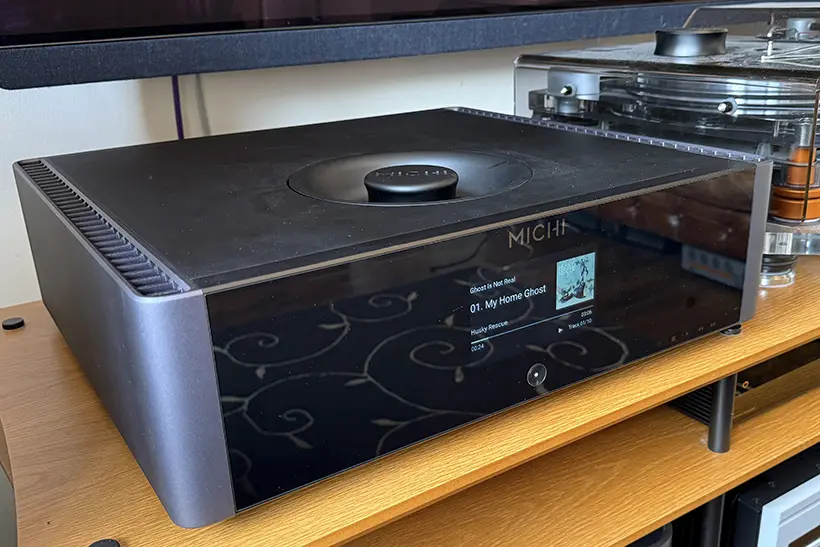
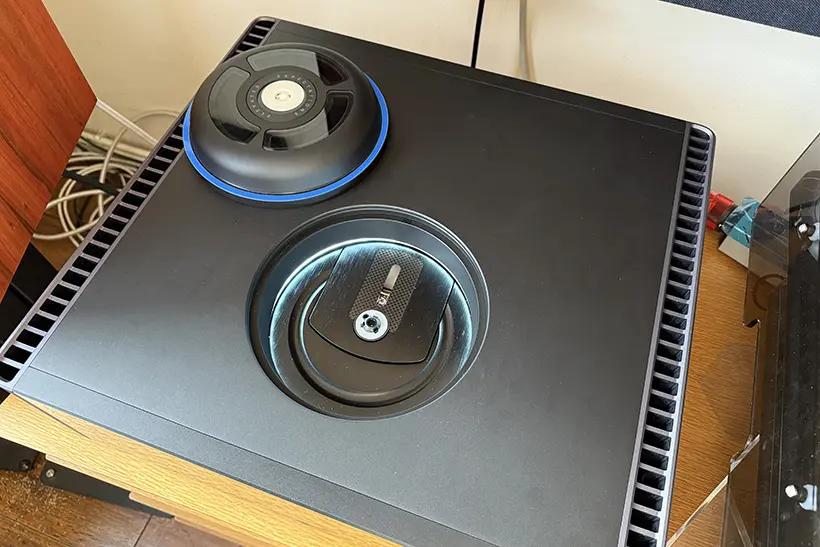
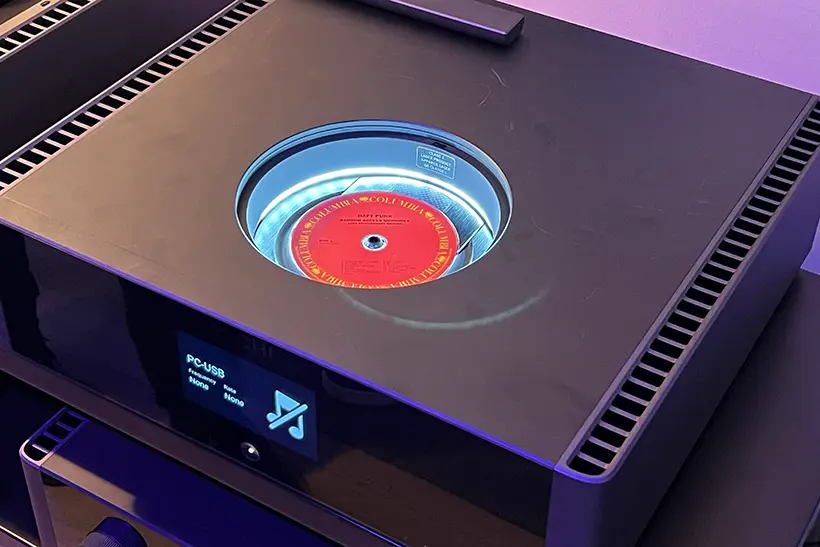
At its core, the Q5 is a top loading CD player that makes use of a custom mechanism that borrows some components from lesser Rotel CD players, but uses them in a wholly bespoke top loading implementation. Every major component you come into contact with is metal and the entire CD mechanism is mounted on a floating spring assembly to reduce unwanted vibrations and physically isolate the motor from sensitive electronic circuits. A large removable lid weighing over a kilo is used to secure the disc in place. Remove it and warm white light illuminates the CD enclosure. The whole mechanism looks and feels like it should be doing something more special than playing the album of your choice.
Decoding is handled by a single ESS ES9028PRO DAC. This is an 8-channel device which allows Rotel to dedicate 4 channels each to the left and right audio signal paths. This allows the output stage to be a fully balanced, fully differential circuit design even though there is only a single DAC chip in the circuit. As you might imagine, the 44.1kHz signal from a CD (and only a CD incidentally; the Q5 is not an SACD player) is barely scratching the surface of what the DAC is capable of.
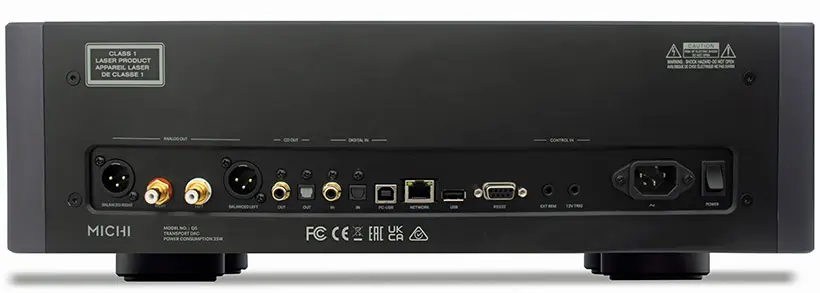
To this end Rotel has also fitted a selection of digital inputs to the Q5; one optical, one coaxial and one USB connection. The latter allows for sample rates up to 384 kHz PCM and DSD 256 to be sent for decoding. These numbers are comfortably surpassed by a number of other devices but should be more than sufficient for the vast majority of recorded music.
The supporting engineering is suitably thorough as well. Dual in-house manufactured toroidal transformers (a longstanding Rotel speciality) ensure that the digital and analogue voltage supplies are kept separate, significantly reducing noise and interference. Additionally, the CD drive motor voltage and current power supplies are electrically isolated from the audio signals in a further effort to reduce noise. Everything is then encased in the enormous (and I do mean enormous, the Q5 has a substantial footprint) Michi casework which should be commendably resistant to external vibration.
Networking
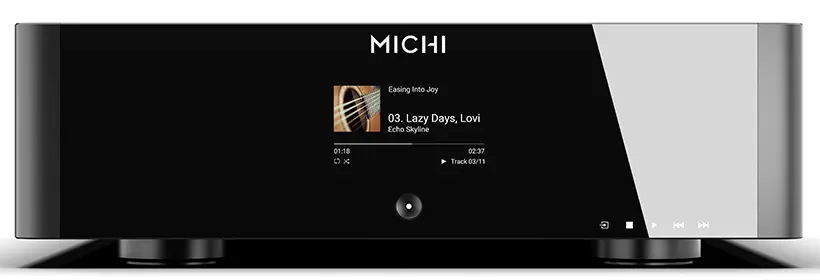
Some of you will have noticed the presence of an ethernet connection on the rear panel and assume that I must have missed the existence of an internal streamer. You would however, be mistaken. The Q5 uses the ethernet connection solely to look up metadata for the CD that you have placed in the transport and it serves no other functional purpose. As looking up data is not a particularly intensive process you might reasonably ask if this can also be achieved over wi-fi but no; the Q5 will need direct access to your router to put a small album cover and track info on the display. Which, in the interests of fairness, it has been quite effective at doing under test; finding info for discs I thought would flummox it.
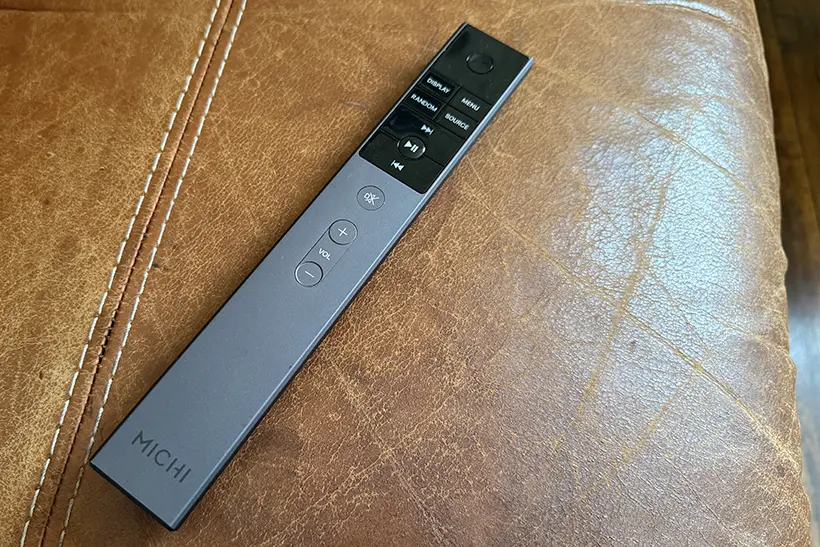
There are some operational foibles too. There is no stop button on the remote and to actually stop a CD requires you to hold the pause button down for several seconds. At first glance there appears to be no controls at all on the front panel but they are hidden on the underside of the front lip. Under testing, the USB input has also been somewhat delicate. It has connected happily to my MacBook but both and Eversolo T8 transport and Chord Electronics 2Go and 2Yu have required using coax for any consistency. In better news, the transport has handled damaged discs that have been an issue for other players without issue and it reads the table of contents quickly too.
Sound quality
Thus far, I have suggested the Michi Q5 is somewhat bloody minded, enormous and somewhat quirky in operational terms. The thing is though, for all of this being true, I also really like it. The quality of the construction and execution goes a long way to justifying the asking price and there is a genuine sense of ceremony to using it that can often be all too lacking with a digital source. More than any of these things though, it sounds fantastic.
The single most impressive thing that the Q5 does is that it avoids any of its formidable technology or engineering becoming the story of what you hear. Listening to Mark Lanegan and Duke Garwood’s Black Pudding, the delicacy and texture of the material is beautifully reproduced. When Lanigan’s much missed sandpapery vocals begin they are totally superb and utterly believable; an effortless focal point that Garwood’s almost hypnotic guitar work is entwined around creating a captivating performance delivered without embellishment. Partnered with an amp and speakers possessed of the same talents and you’re left to enjoy this gorgeous album with little to no intervening sense of reproduction taking place.
Ask the Q5 for the larger and more dynamic Unreasonable Behaviour by Laurent Garnier and it effortlessly increases the scale and impact on offer. The bass extension in particular is extremely impressive. There isn’t ‘more bass’ than rivals but there is a texture, definition and control to what the Michi does that makes everything sound as weighty and impactful as it should. As the album builds towards the might of The Man with the Red Face, the Q5 delivers this potent, high tempo track with the pre-requisite scale and agility. As part of its relatively self-effacing nature, the Q5 is not the most ballistic sounding device going but it’s more than able to deliver speed and attack when you need it.
Digital inputs
Perhaps unsurprisingly the performance by the digital inputs is largely in keeping with that of the CD mechanism. Listening to the recently released Wheels Turn Beneath My Feet Vol 2 by Fink highlights the ability of the Q5 to deliver what are essentially small scale performances without losing the powerful sense of the venues that they are being performed in. This sounds relatively simple but it can confound even some extremely talented sources and it’s another facet of the Michi’s genuine desire to not be the story itself. This is undoubtedly helped by the recording themselves being excellent quality but the Q5 has been impressively resistant to less than stellar mastering on other material too.
This feeds into a wider sense that the Q5 eschews certain functionality to better allow this sense of all round ability to make itself apparent. There are no adjustable filters or upsampling options, let alone EQ or other more direct adjustments to the output. I’m sure this will annoy a subset of people but probably not the people who might be genuinely tempted to spend the money on what the Michi offers. This is a statement product by an experienced company and that statement is in part that they feel the listener should benefit from that experience. The more time I’ve spent with it, the more that every part of the Q5 – even the parts that are a bit odd – feels deliberate in how it’s been done.
Conclusion
Of course, what has been done is not going to have universal appeal. One of the more immediate oddities of the Q5 is that all the matching amplifiers and preamplifiers in the range have their own decoding, requiring owners to double up if they want a pair of components. Given that SACD is also a key reason why a number of people persist with optical disc, the absence of direct support via the mechanism will rule the Q5 out for that subset too.
There will quite a few other people though who will find the Q5 rather harder to resist. It combines a sense of solidity and ceremony to its operation that, even judged at the lofty asking price is hugely impressive. We’re at a point in CD’s life where you need to give serious thought to the overall longevity of your hardware if you’re in this for the long haul, the Q5 feels hugely confidence inspiring. It also delivers a performance that can take a large and disparate collection of genres and artists and manage to do justice to all of it. This is an odd product but the quality and confidence of its execution means it’s a rather brilliant one too.