


Henry Audio DA 256 DAC
Eleven years ago we were contacted by Norwegian programmer Borge Strand-Bergesen who had created the Henry USB DAC MkII, a compact single input converter that ran off the 5V provided by a USB connection. That DAC was surprisingly good for its €260 price at a time when there were few alternatives available for the budget conscious computer audio enthusiast.
A few weeks ago Rich Trussell at Network Acoustics said that he had been getting excellent results with the latest Henry Audio converter which is a rather more ambitious device than its predecessor but still sensibly priced at £1,100 and compact in form. The DA 256 has two USB inputs, one for streamers/PCs and another on the front for smart phones, alongside coaxial and optical connections, and it has a pair of sockets for a DC power supply of your choice. Borge has got around the perennial manufacturing problem of different voltages/mains power frequencies around the world by leaving the power supply choice up to the end user.
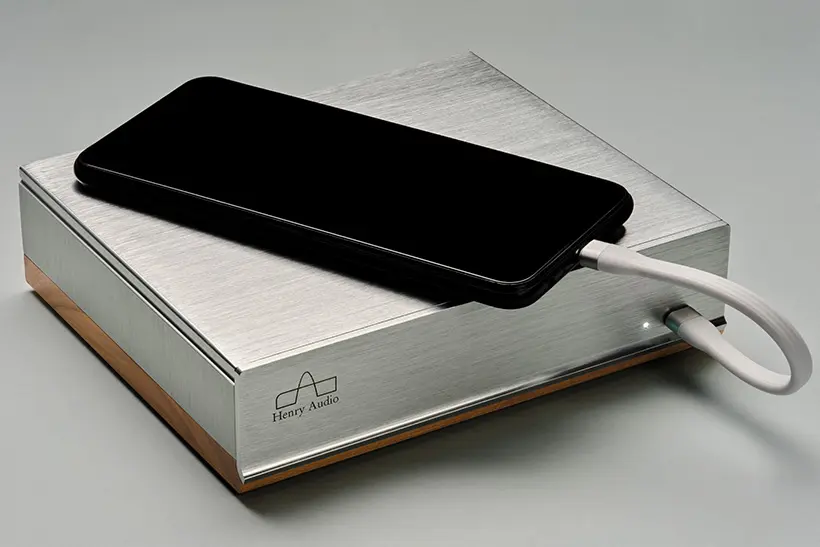
Many if not all of today’s compact audio devices have separate power supplies and these are often quite basic to keep overall costs down. As there is no power supply in the box with the DA 256 the user can choose pretty well any example they like as long as it provides between 8 and 16 volts, the DAC only needs 200mA which means that literally almost any supply will do. The Henry also has twin barrel connectors to suit the most common plugs (2.1mm or 2.5mm centre pin) found on such supplies, which is helpful. Borge doesn’t endorse any particular power supply but knows that good results have been achieved with the Network Acoustics Origin and Teddy Pardo designs.
What lies within the sleek aluminium and hardwood case of the DA 256 is a PCM converter chip capable of decoding up to 24-bit/192kHz sample rate signals, DSD is not on the menu. What makes the Henry stand out from the crowd is the attention that Borge has given to clocking and power supplies, he takes the unusual step of describing the clock as and analogue signal because it tells the DAC chip precisely when to convert digital to analogue, and that the tiniest errors in this timing result in “the illusion of reality breaking down.” The error is usually called jitter but this description is a good one and makes it easier to grasp why clocking is critical.
One area where the Henry DA 256 differs markedly from the norm is in the way it deals with USB signals. The vast majority of DACs use an XMOS receiver for this purpose but, having an enquiring mind, Borge Strand-Bergesen took a route less travelled and used an open source design called Audio Widget. This he simplified for his first DAC the aforementioned Henry USB DAC. The design was refined by further by Borge and Audio Widget team members for the DA 256.
When it came to including SPDIF and Toslink inputs in the DA 256 Borge had a few ‘while I’m at it, why not moments…’ as he calls them and added a buffer for the incoming digital audio prior to playback via the precision oscillators used for USB. This compensates for the fact that a DAC cannot control the clock in a CD player, the usual answer is to regenerate the master clock of the source but this can create noise and probably explains why CD players are not always improved by external DACs. Buffering the signal is one way of overcoming this issue, apparently this represented ‘some fairly huge programming challenges’ but it’s what this guy does instead of ‘solving Sudoku or watching Netflix!’
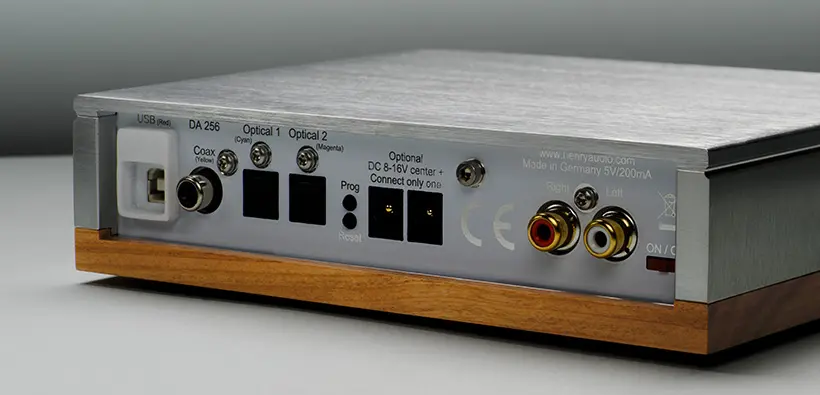
The LED that provides the only sign of life on the DA 256 is used as an indication of the input that is being decoded, coax SPDIF shows yellow and the rear USB B port as red alongside shades for the other three options. Input selection is automatic, whichever input is receiving signal will be converted, which means you shouldn’t have two playing simultaneously, but why would you. This means that the DA 256 is very simple to use, it literally is plug and play.
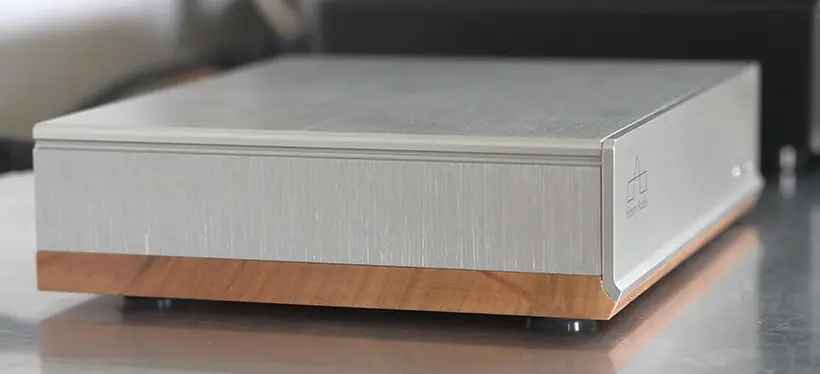
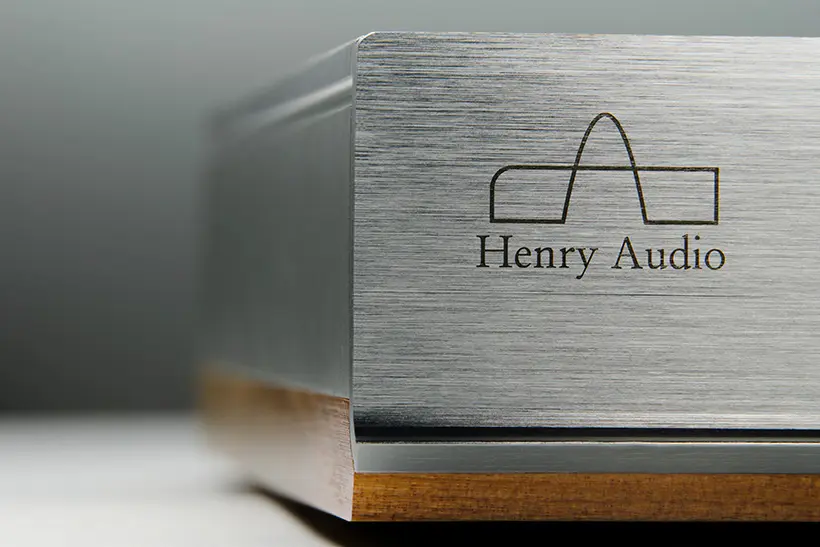
It’s worth mentioning the casework on this DAC, it may be small but it is beautifully formed, I particularly like the hardwood base which seems an extravagant move at this price but may have something to do with the sound if certain other manufacturers are to be believed. It’s worth mentioning too that it’s made in Germany, a rarity in affordable audio gear.
Sound quality
As the DA 256 was recommended by Network Acoustics I did most of my listening with their Origin power supply, this is more than twice the price of the Henry but gave a very good idea of what this DAC can do under optimum conditions. It’s also worth remembering that the reference Bricasti DAC chez Ear is over three times the price of the DA 256/Origin combined. I did however try it with a range of alternative power supplies to see what difference they would make.

Listening commenced with a coaxial connection to the Mutec MC3+ USB reclocker which gets signal from a modified Lumin U2 Mini streamer, the usual digital front end. I put on Joni Mitchell’s Moon at the Window and was impressed by the tonal balance of the DA 256 which shows little or no indication of its affordability; vocal, horn and bass were all excellent and well timed, which is often a failing of affordable DACs. Image projection is good too, the bass and guitar on a different track being really solid in the room.
You can hear the DA 256’s affordability in a slight veiling of fine detail if you compare it to something significantly more expensive but taken on its own this DAC is very hard to fault. It has an organic ease that is very engaging combined with considerable resolution for the asking price.
Power supply roulette
The M2Tech Van Der Graaf MkII power supply (£1,783), is a 9V or 16V device based around SMPS electronics that is used to power the Mutec Nano 10 word clock which assists the reclocker mentioned above. It has multiple outputs so it was easy to connect the DA 256 as well. The result with 16V from this was a spacious and precisely timed sound with excellent depth resolution, this suited Ali Farka Toure and Ry Cooder’s Ai Du to a T, the languorous yet taut tempo and hypnotic rhythm drawing me into the ultimate desert blues.
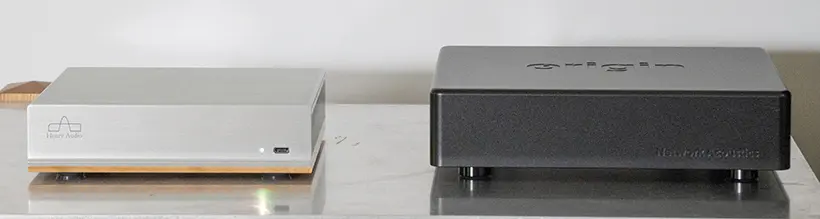
The Network Acoustics Origin (£2,495) hybrid supply has a 12V output that allows the Henry to deliver significantly better dynamics with a distinct increase in depth of image and realism. A 16V SBooster BOTW Eco MkII linear supply (£349) worked remarkably well with the Henry, allowing the effects on a vocal to be clearly defined without obscuring the fact that Cleo Reed has an excellent voice in the first place. The sound of both voice and band being highly articulate and engaging whilst escaping the speakers with ease.
Ifi’s 15V Elite SMPS supply (£299) delivered a harder edged, crisp and shiny sound that is vital and timely but lacks the relaxation that the alternatives allowed the DA 256 to deliver. MCRU’s smaller regulated LPS (£235) provided a bigger boned, warmer sound with this DAC but one that struggled a bit with more complex material. A 12V version of the MCRU XLCR (£1,500) on the other hand allowed the DA 256 to produced a much more appealing result with a fruity, open sound that was big on scale and warmth to the extent that it gave this DAC an almost tubey flavour. I could have lived with this for the duration of the Henry’s stay had it not been for the low noise precision of the Origin, which gives the Henry an immediacy and focus that takes it very close to giant slaying territory.
I also gave the USB input a try direct from the Lumin streamer (the Mutec doesn’t have a USB output), this proved to be quite an addictive combination and had me listening to a lot of favourites and hearing a lot of fine detail in them. The DA 256 providing tension, atmosphere and clarity in abundance. It makes a contrast with the relatively mellow and fluent coaxial result but a smaller one than usual, results with USB vary quite widely and I generally prefer coax but here the difference in musical engagement was not so obvious.
It’s a bit crisper but with a decent recording that just means more insight into the music which is more open if less relaxed, possibly dare I say it, more accurate. I went back to the Ali Farka Toure and had to let it run on beyond the usual test track. With USB the DA 256 also reveals the spring in the step of Bill Frisell’s Winslow Homer without sounding hard edged.
The more I listened via this input the more I liked it, while not quite as smooth as coax it is notably more revealing and times exceptionally well, it is more precise but remains musically coherent and sounds excellent with decent recordings like the Liv Andrea Hauge Trio’s Døgnville. This piano trio really caught me off guard, I know it fairly well but it is rarely as emotionally involving as it was via the Henry DAC.
Conclusion
The Henry DA 256 may not be very big but it is very nicely formed and far more capable than you would expect of something so relatively affordable. You have to source a power supply but this provides an almost limitless upgrade path with a starting point that can be as inexpensive as you like.
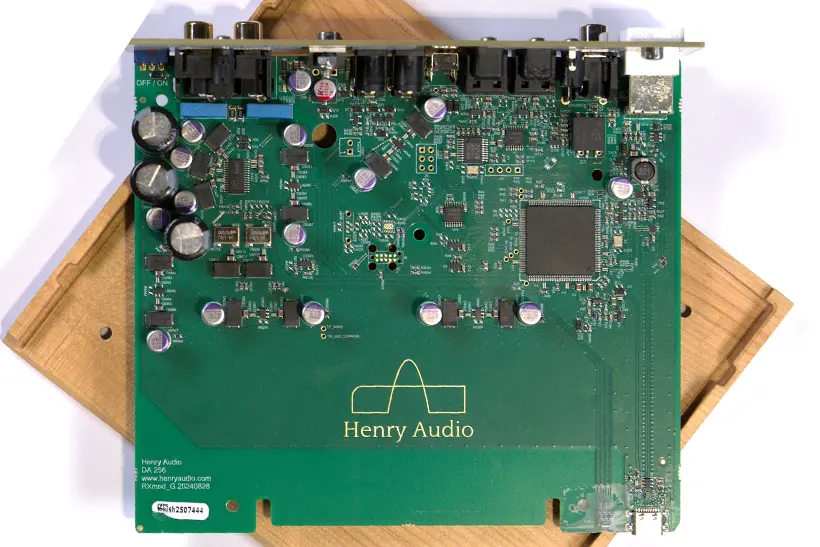
I also experimented with isolation underneath the DA 256 to good effect, DACs are surprisingly sensitive to vibration. The Henry is an open source device in its own right, Borge publishes both the schematic and source code online. The less technical among us can be tweak and upgrade in any way we want and the DA 256 has a lot more to give than products at this price usually manage. In our view that makes it a big of an audio bargain.
Pros
Exceptionally natural, engaging and well-timed sound
Excellent value with genuine high-end performance potential
Highly responsive to power supply upgrades
Superb USB implementation with impressive clarity and precision
Beautiful compact build with quality aluminium and hardwood finish
Simple plug-and-play operation with versatile digital inputs
Open-source design encourages future tweaking and upgrades
Cons
No power supply included
Limited to PCM (no DSD support)
Fine detail still trails much more expensive DACs
Automatic input switching may not suit every system setup