


Arendal 1610 Bookshelf 8 speakers
A relative newcomer to the audio scene, Norway’s Arendal has a burgeoning array of loudspeakers which are worthy of investigation. Newest to the line-up is the 1610 series which includes the compact three-way Bookshelf 8.
From Norway with love
Arendal is a historic port city located in Agder county, in southern Norway. The name comes from the Old Norse word Arnardalr which translates to Valley of the Eagles. Now Arendal is an audio brand growing in popularity, not least because by selling direct to end-users pricing is highly competitive and none more so than with the Bookshelf 8 here which is a pared-down derivative of the 1528 variant.
The 1610 range has particular significance because it was the year that the town of Arendal gained permission for international trade, a status boost for the municipality. There are three models alongside the Bookshelf 8: a centre speaker, a floor stander plus a shallow, infinite baffle unit aimed at home theatre applications.
Design
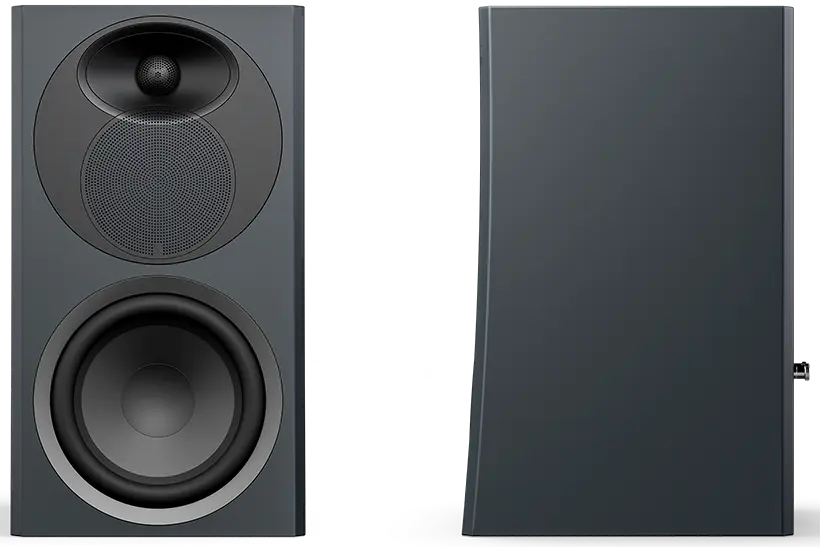
Bookshelf by name if certainly not by nature, the sturdy design weighs in at a little over 16kg and stands nearly 50cm tall, so in reality a stand mount unless they have very strong and deep bookshelves in the Nordics. The Bookshelf 8 is unusual in being a true three-way, whereas the majority of transducers of this size and price tend to be either two- or two-and-a-half ways where a pair of woofers share the bass output but the crossover ensures only one extends into the midrange and crosses over to the tweeter.
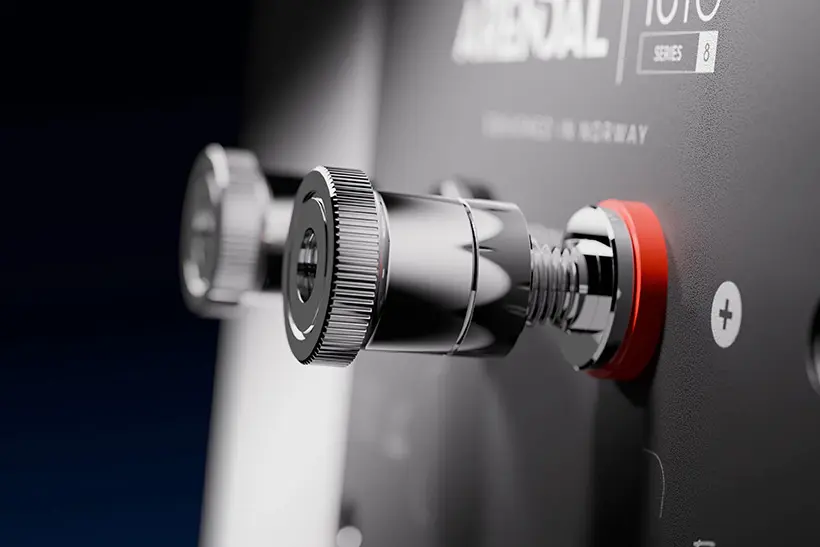
The cabinet here is made of 18mm high-density fibreboard with internal bracing while the front baffle is 46mm thick. A large 32Hz reflex port is located to the rear, never my preference as it can make room placement trickier but has other sonic advantages. Below this lies a single pair of rhodium-plated copper cable terminals.
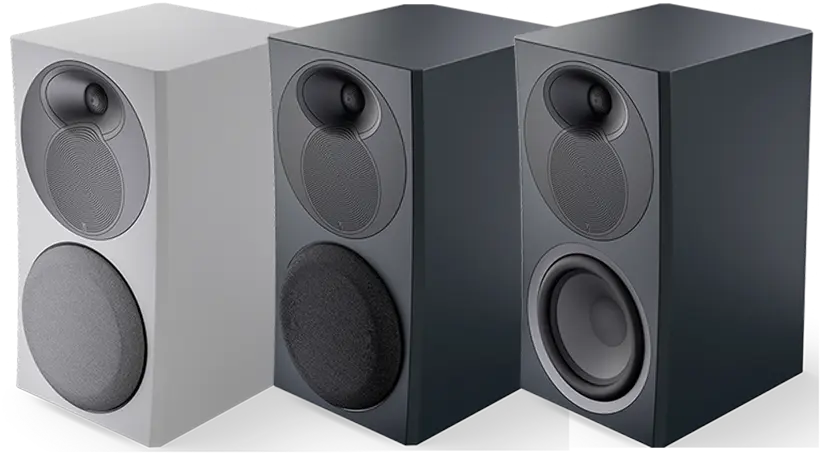
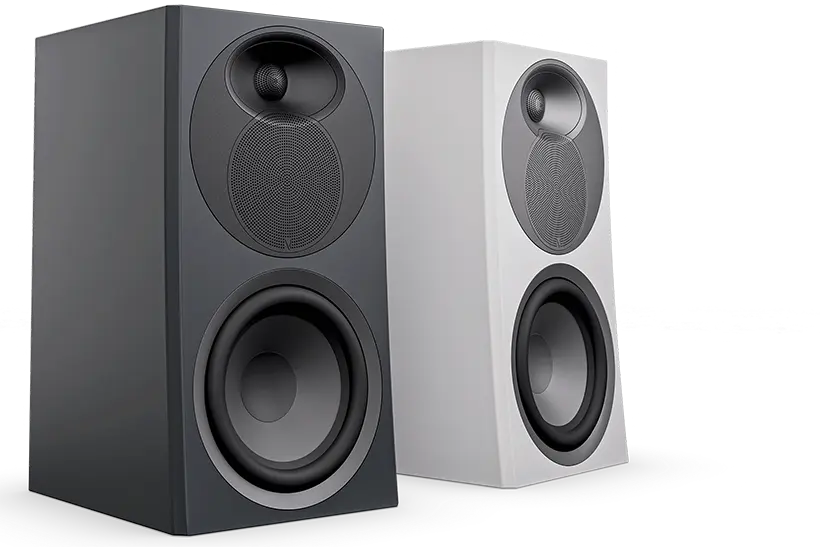
Highs are covered by a 28mm tweeter featuring an aluminium/magnesium diaphragm driven by a powerful neodymium magnet with internal copper shorting ring for improved efficiency and power handling. The 130mm carbon fibre midrange unit sits below this in the upper of two circular driver housings. The lower is dedicated to the 200mm (or eight-inch, hence the ‘8’ designation in the name) aluminium-coned woofer which is cable of large excursions. The front is rather oddly angled downwards for phase correction, while the tweeter sits in an elliptical waveguide dubbed Røst Essence Acoustic Core which brings the two upper drive units closer together for improved dispersion and emulates a point source.
We are sans a main front grille although a small, circular magnetic cover is provided for the bass unit if desired. Finish options are limited to white (polar) or black (basalt).
The crossover is worthy of mention in that the three-way design necessitates its complexity, at 330Hz and 2.3kHz. It features high-quality components such as air-core inductors, polypropylene caps and heatsinks in the fourth-order (treble, 24dB and second-order (mid/bass 12dB) filters.
Sensitivity is on the low-side at a quoted 85dB in a nominal four-ohm design (dipping to three) but should not prove difficult for most modern amplifiers to produce decent in-room SPLs.
Installation
Although lighter than the 1528 derivative, the 1610’s Bookshelf 8 deserves some sturdy stands and I pressed my 70cm Tontrager P3s into service. Experimentation showed a very slight toe-in to be best for soundstage and imaging while I left the foam bungs in the rear ports and they were only removed when the listening panel arrived and wanted “more bass”.
Initially connected to my trusty Hegel H190, in matching white (so it must be a Norwegian thing because in the UK white goods are normally confined to the kitchen) I soon paired the Bookshelf 8s with the more muscle-bound H600 which I know is happier with lower impedance loads and has the advantage of onboard Qobuz Connect streaming.
Switch-on
Very familiar with loudspeakers of this size, albeit usually two-way designs, I was awestruck by both the quality of the sound and the amount of top-quality low frequency output the Bookshelf 8s were able to produce. It was clear from the start that this is a lot of loudspeaker for the money. An incredible amount.
On a variety of material, including a great deal of speech-based sources, several things became clear. These are about as far removed from a BBC-design monitor as you can get; their raison d’etre is sound-staging and bass reproduction; they are happier playing loudly, in fact the louder the better, and probably lean more towards rock and pop than small-scale classical.
Tonally, the Bookshelf 8s create a mightily impressive sound and turn any recording into a performance – but that’s not to say they won’t reveal poor recordings, warts and all, when given them. Live material is handled so exceptionally well that I really thought at times that I was listening to larger floor standing loudspeakers. Dynamics are among their forte and they really enjoy complex material that’s full of hard and fast passages, handling those with aplomb; percussion noticeably so.
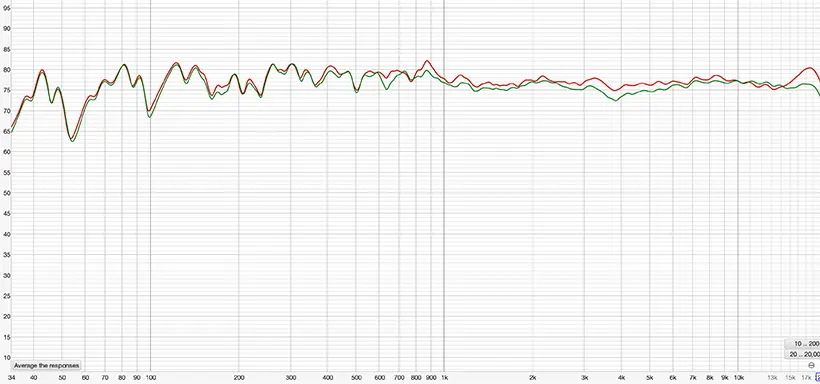
Despite my reservations about pure-speech replay, the Bookshelf 8s handle sung vocals well enough and are not a loudspeaker that rams the singer into the listener’s lap, as by a quick in-room frequency response check which shows a mild downhill trend through the presence region. That’s a good thing here because otherwise the Bookshelf 8 might be really aggressive, and there are already plenty of loudspeakers on the market with that trait, thank you very much.
No, the Arendal balance is just right for most kinds of music and is clearly the result of many hours of listening, adjusting, more listening and more tweaking. The treble is so good, detailed without being brash or bright, and pairs so well with the exceptional bass that goes down deep with those port bungs removed.
Panel musings
A somewhat depleted panel due to summer holidays, they removed those bungs, moved the chairs back and settled down. I then realised that some of my listening had been affected by trying to use the Bookshelf 8s as nearfield monitors when that’s not their party piece.
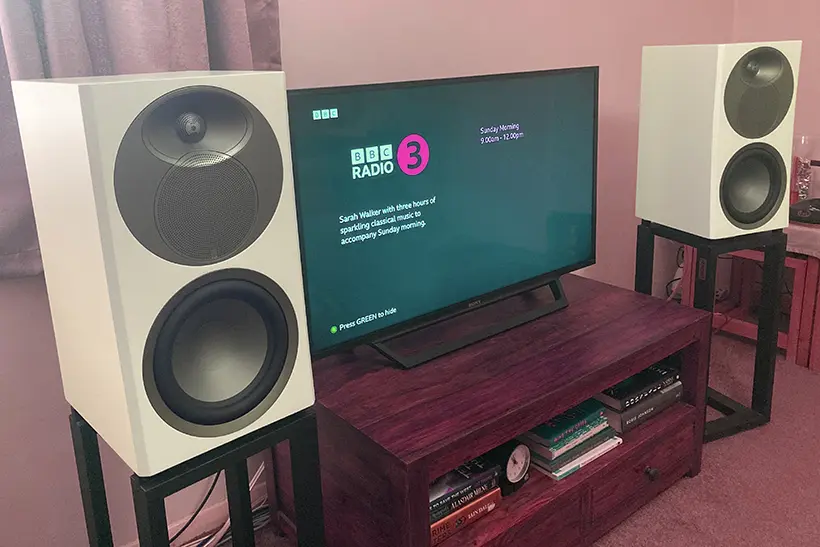
We revealed much of the Bookshelf 8’s magic and talent with the iconic synth-funk anthem Party All The Time. This iconic 1985 tune came alive and brought funk legend Rick James’ backing vocals to the room as Eddie Murphy let rip in a memorable performance that had our feet tapping. Truly these speakers are for the music-lover and added a level of authenticity the panel said they rarely heard from this track on their own systems. The bass was powerful, extended and clean.
Moving to the original Big Rich Town and its seamless blend of 50 Cent’s street-flow and Joe’s smooth, soaring R&B vocals on the chorus had us enthralled with what these compact boxes could do. The soundstage was enormous, in height, width and depth, while the overall presentation of dramatic strings, heavy bass, and a female vocal loop was so spot-on as to cement the tension in a spine-tingling sound that we shall all remember. These babies can rock and rock hard.
Time after time the panel noted the phenomenal bass abilities of the Bookshelf 8s: the speed, the sheer attack and detail conveyed through the low frequencies with the ports unblocked. All this from such a modest cabinet really defies physics. If you like your bass big, your bass flawless and your bass fast then look no further until you’ve heard these Norwegian boxes.
If the Bookshelf 8s can add a sense of occasion by making studio recordings seem almost live, they are probably at their best with true live material. Have we ever heard Supertramp’s double live album Paris (recorded the Breakfast in America tour) sound as good as this on anything at even twice this price? I was asked. I had to admit, probably not. It was knockout. While the album clearly captures the band at their creative and commercial peak, it can sound muted and lose its sparkle and spontaneity on lesser speakers. But through the Arendals the widely acknowledged pristine audio quality, faultless musicianship, and the perfect blending of Roger Hodgson’s pop sensibilities with Rick Davies’ bluesy, progressive roots lost nothing and we listened in awe at what these modest loudspeakers were able to recreate.
Conclusion
All-in-All, Arendal have created a ‘salty’ little number in their 1610 Bookshelf 8, by which we mean in audio terminology, a sound profile that is crisp, punchy, and lively. The design produces energy with a slightly bright top- end and well defined, tight bass – it gives the audio extra flavour or zest, much like adding salt to food.
This sound will prove popular with many users and at least one panel member is considering them for his home theatre set-up to experience the bite and attack that the design offers.
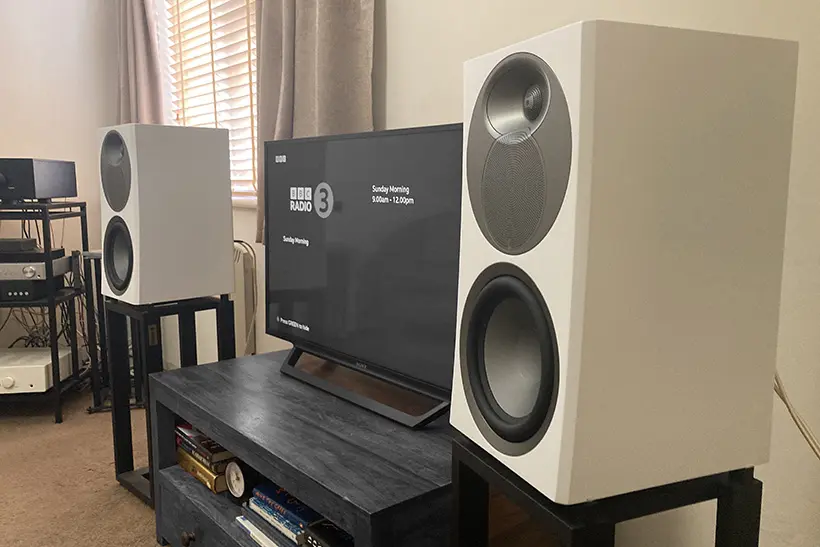
Value-for-money with the Bookshelf 8 is exceptional and I can’t think of a better-value loudspeaker. Truly deserving of a Best Buy status it’s a design that will please many music lovers, especially those who like a big, full sound at higher SPLs. The compact Bookshelf 8s are capable of filling big spaces with high-quality sound.
Pros
Huge, deep and exceptionally controlled bass for a standmount speaker
Expansive soundstage with excellent dynamics and scale
Detailed, refined treble that avoids harshness
Outstanding value for money
Thrives with rock, pop and live recordings at high volumes
Cons
Large and heavy for a “bookshelf” speaker; requires sturdy stands
Rear ports can make room placement more demanding
Low sensitivity and 4 ohm load benefit from a capable amplifier
Less suited to nearfield listening
Speech is not as clear as some rivals