

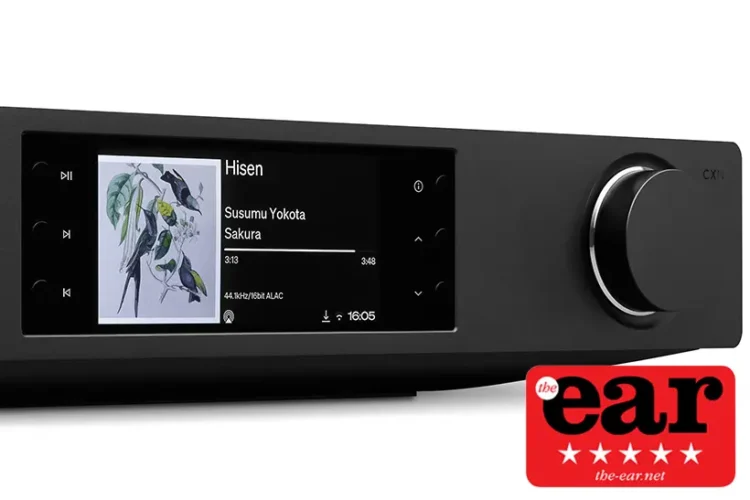
Cambridge Audio CXN100 SE streamer
The affordable end of the streaming market has seen a lot of activity over the last few years, especially with the addition of killer products from brands such as Wiim, Eversolo and Bluesound, to name a few. Meanwhile, London-based Cambridge Audio have been quietly getting on with the job of evolving their range of streamers, based on the well established Stream Magic UPnP platform.
As many readers will know, Cambridge Audio produce a full range of components. Although the CXN100 SE is designed as the natural partner for the brand’s popular CXA81 MkII amplifier and CXC disc spinner, the CXN100 SE is intended to be a great way to add high-quality streaming to any decent system.
I reviewed the Cambridge MXN10 a couple of years ago and found it to be an excellent performer that was a doddle to use. At the time of the review, it cost £449, but the price has since been reduced to £349, which, coincidentally, is the same as the Wiim Ultra. The MXN10 lacks that model’s display and phono stage, but, in my book at least, it more than makes up for it by supporting DSD files. The CXN100 SE is the next model up in the range and retails at £899, so circa double the MXN10’s original retail price.
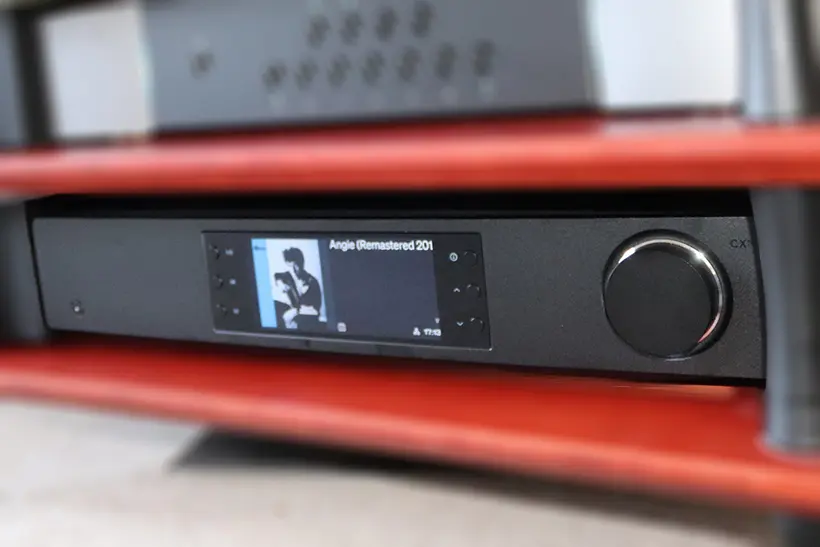
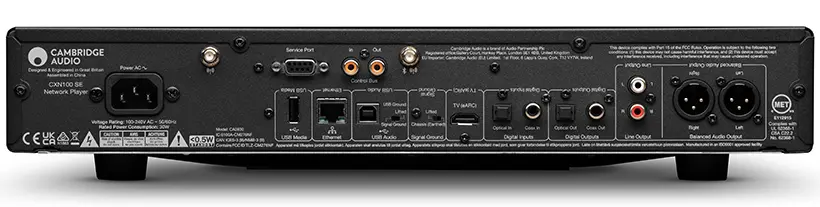
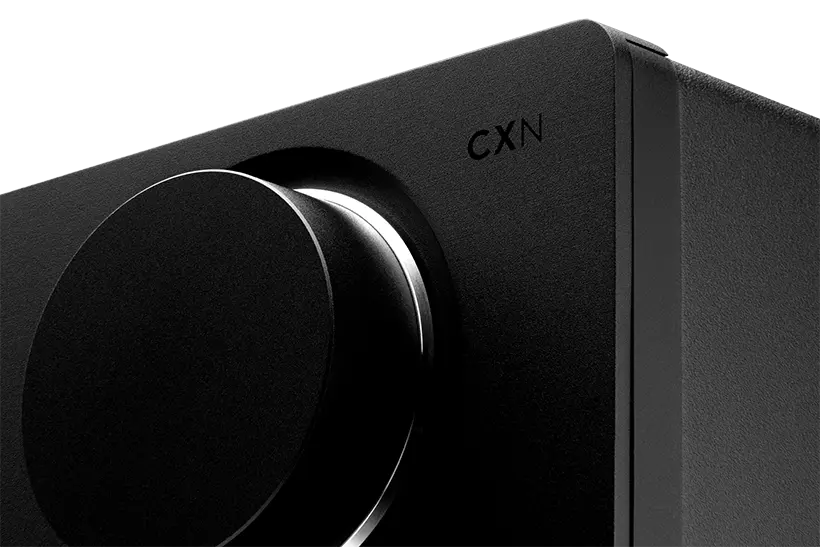
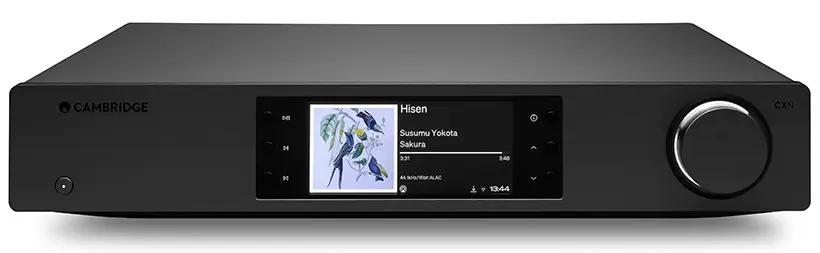
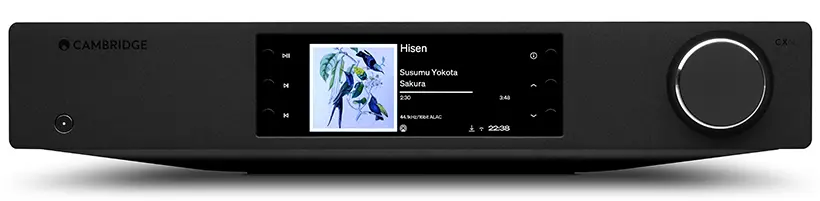
Considering the price difference, you would hope to see some tangible improvements, and thankfully, there’s no shortage of them. For a start, the CXN100 SE is a full-width component, and features a high-resolution, colour display. Additionally, there’s a preamp mode with a decent-sized volume control knob and a more advanced DAC stage. Noteworthy on the connection side, are additional XLR outputs and a proper IEC power input, which makes upgrading the power cable far simpler.
This SE version is a replacement for the original CXN100, with the SE moniker adding an HDMI ARC input, and the option of the attractive black casing of my review sample, which is only available for a limited period.
Features galore
The CXN100 SE proved easy to integrate into both my headphone-based setup and my speaker-based reference setup. I didn’t need to refer to the manual to connect to the wi-fi, which, once I had managed to enter my network password correctly, don’t ask, connected seamlessly and maintained a stable connection throughout its time in the system.
The Stream Magic app was already installed on my phone, so I used it to scan and configure the machine, and initially to stream music. Within the app, I found a 7-band EQ and room-correction software, which may prove useful to some. Additionally, there is a control bus facility, so you can use the app to control the volume of a Cambridge Audio amplifier that is connected via a control bus connector. As I have several streaming devices in the house, it proved more convenient for me to use either JPlay or Qobuz Connect, mainly because I often wanted to continue listening to something in one room that I had begun in another. Both of these apps immediately found the CXN100 SE on my network and integrated seamlessly. I will add that music streamed using JPlay sounded slightly cleaner and more transparent than the native app as is usually the case.
Along with Qobuz Connect, CXN100 SE also supports Tidal Connect, Spotify Connect, Amazon Music, Deezer, Apple Airplay 2, Bluetooth aptX HD, internet radio and is Roon ready. Despite this plethora of options, when I wasn’t streaming from Qobuz, I accessed music from a Melco/Dela server over my home network, which worked just as flawlessly. If you don’t have a server or NAS drive, you can play files from a USB stick or, indeed, a USB HDD/SSD drive, via the appropriate input. The CXN100 SE has a built-in Chromecast, therefore it’s compatible with Google Home devices. Additionally, users can access the CXN100 SE’s DAC stage via USB and SPDIF inputs.
The DAC is based on the same ESS9028Q2M Sabre32 chip as many a far more expensive machine. Therefore, it plays PCM files up to 32/384kHz and can handle higher-rate DSD files, which many of the machines I’ve tested recently couldn’t manage.
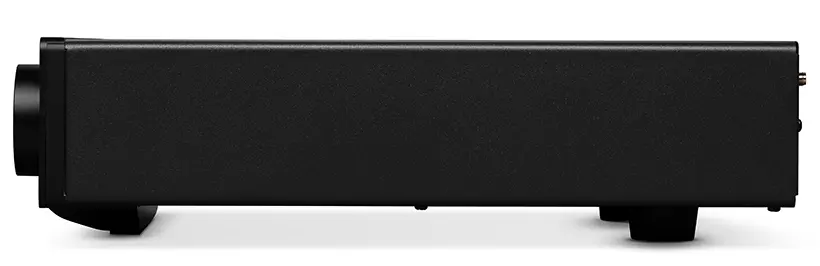
The overall build quality is up to the standards one would expect from a Cambridge. It’s not the heaviest machine on the market, but it feels well put together, and its looks don’t let it down, especially when you give the display the chance to show some fancy track artwork. I only noticed the sloping effect on the lower edges of the front of the machine whilst taking photos, which is a nice visual trick, even if it isn’t visible in all situations.
Streaming magic
The CXN100 SE spent most of its time chez Baillie as part of my headphone setup, where it replaced a Wiim Ultra streamer, which, most of the time, feeds a Denafrips Iris/Ares DDC/DAC combo. My headphone amp is the Heed Canalot III, which, with the matching Q-PSU power supply, makes for a formidable combination and gives my Hi-Fi Man Sundara headphones the current they thrive on.
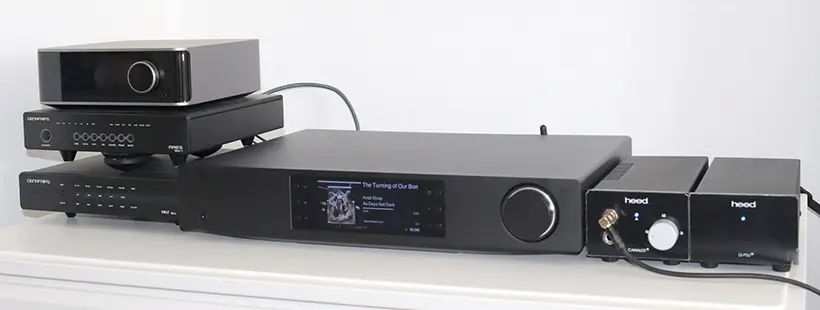
I enjoyed listening to music on the Cambridge CXN100 SE, whether via Qobuz or stored media; it was never less than entertaining. Occasionally, I’d reference my Chord 2Go/Hugo2, and note that it sounded more focused, detailed and lively, but it does cost considerably more than the Cambridge and Heed combo.
The CXN100 SE was simply being used as a music source, and I wasn’t thinking critically. Being all too aware that Cambridge would probably be asking for the review sample back imminently, I thought I had best make some comparisons. To make things fair, I removed the Denafrips DAC and connected the Wiim Ultra directly to the Heed Canalot III and listened to a few tracks. Unfortunately, the Wiim’s RCA sockets are recessed to the point that there was insufficient space to use my favoured MCRU No. 71 interconnects, or my second-choice cable; therefore, an elderly pair of Russ Andrews/Kimber interconnects was pressed into service. Using the same cables, I substituted the CXN100 SE and repeated the same tracks.
Arab Strap’s The Turning of Our Bones (Qobuz 24/48) sounded considerably bigger, yet warmer than via the Wiim Ultra (£349). The latter was nicely detailed but sounded slightly synthetic compared to the more expensive Cambridge machine. Through the CXN100 SE, the music had more weight; in fact, the lower frequencies were better fleshed out and more satisfying.
Moving on to Sly & The Family Stone’s If You Want Me to Stay, Rustee Allen’s bass guitar was more defined and, well, funkier. Overall, the track was more convincing and authoritative. The presentation was, if anything, slightly warmer and less forward than via the Wiim, yet it proved more engaging.
The CXN100 SE’s overall presentation is fulsome and somewhat warmer than one might expect. This is probably a good decision on the part of the engineers concerned, especially considering the kinds of products it is likely to be paired with. It has been a while since I reviewed the Bluesound Node Icon, but my memory is that it had a slightly livelier and more upfront presentation than this Cambridge.
Moving to the main system, and over a wired network, fed from my Dela S1 switch, the Cambridge worked flawlessly. I even managed to successfully stream a DSD256 file of Jaco Pastorius’s Truth, Liberty & Soul, which has given many a streamer issues. The Cambridge’s reproduction lacked the last degree of hall ambience and space I hear from the best streaming DACs, well, the ones that can play it anyway, but the performance was dynamic and enjoyable, nonetheless.
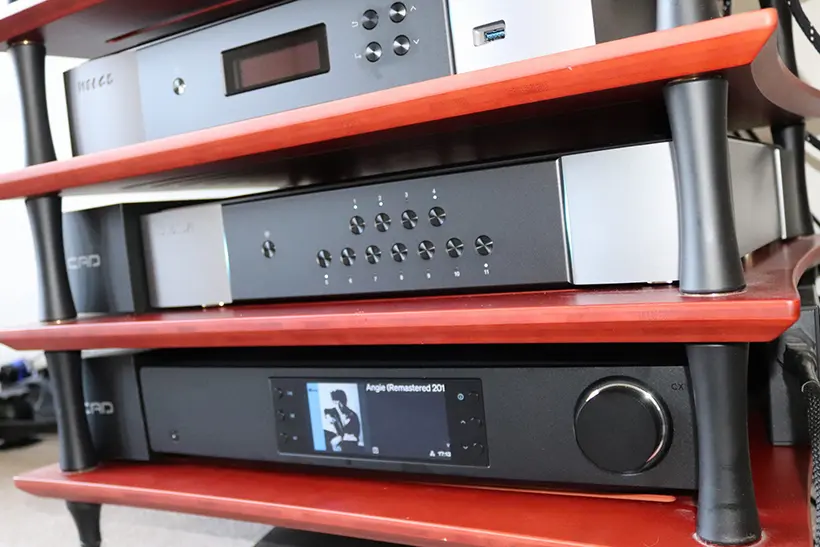
My Moon 780D streaming DAC is significantly more expensive than the Cambridge unit, so it is not a truly fair comparison. Still, I noted an enjoyable rendition of Bert Jansch’s Angie. The guitar’s dynamics were intact, but it sounded more rounded and slightly lacking in bite compared to the far more expensive Moon DAC. Again, at this level, the alternative is often a rather synthetic, etched presentation, and the additional warmth was only noticeable by direct comparison, so, again, an acceptable trade-off.
Conclusions
In a competitive market, Cambridge Audio has produced a well specified, balanced-sounding streamer that works flawlessly. The display is excellent and adds to the user experience. The ARC input is a great addition and in keeping with the type of setup this streamer will likely be a part of.
I have used the Wiim Ultra in many systems, both through its onboard DAC and as a transport to a better one. Whilst the Wiim represents astonishing value for money, the comparisons I made clearly show that spending a few hundred pounds extra on the CXN100 SE brings meaningful benefits, especially if you have a revealing system.
For owners of a Cambridge amplifier, such as the matching CXA81 Mk II, the CXN100 SE is a no-brainer and makes a great visual match. However, this streamer is more than capable of standing on its own four feet and will prove a fine addition to many systems. I would have loved the opportunity to try the CXN100 SE with a power amplifier; if the preamp stage is as good as the rest of this unit, it could prove a killer source.
If you are looking for a simple way to bring high-quality streaming into your life for under £1k, the Cambridge Audio CXN100 SE is tough to beat. I have enjoyed its stay.
Pros
Smooth, balanced and engaging sound quality
Excellent display and premium full-width design
Comprehensive streaming and connectivity options
Supports high-resolution PCM and DSD playback
Stable, easy-to-use Stream Magic platform
HDMI ARC input adds versatility for TV integration
XLR outputs and preamp functionality increase flexibility
Cons
Slightly warm presentation may lack ultimate bite and sparkle
Not as detailed or focused as higher-end streaming DACs
Black SE finish is only available for a limited time
Internal DAC falls short of standalone DAC performance