

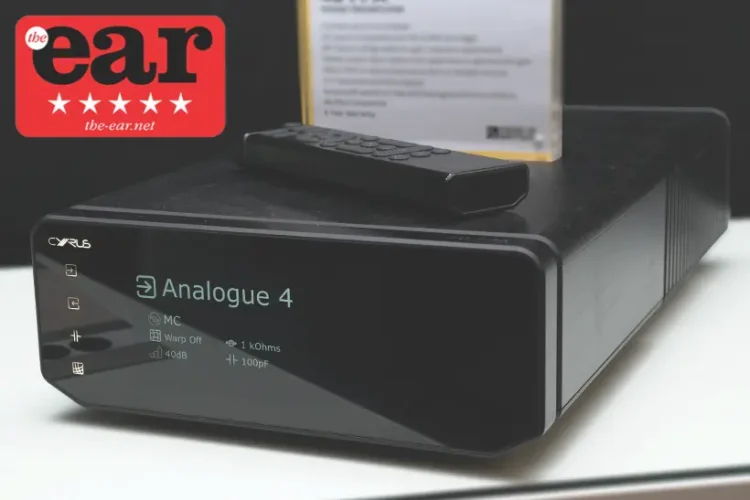
Cyrus 40 PPA phono stage
Dispensing his version of the genre’s history, piano playing jazz dude Ben Sidran sang about the underrated importance of a good travel agent. It goes on a bit but it’s quite good, especially the slightly less long live performance (just over 13 minutes) from the 1986 LP On The Live Side. Honouring Sidran’s urge to educate and, let’s face it, his sheer stamina, I’d like to address the underrated importance to true vinyl lovers of a good phono stage.
Part of the problem seems to be image. Phono stages are generally perceived to be not that sexy, even when the circuitry is liberated from sharing the inside of an integrated amplifier to star in their own show. Partly it’s the jeopardy of being in the company of the very thing they’re serving, what many consider hi-fi’s closest approach to poetry in motion: the kinetic grace of a turntable. Beside the passion and scrutiny lavished on the harmonious contributions of stylus, cartridge, tonearm, drive system, main bearing and platter, a typically plain box adorned with rows of nail splintering DIP switches doesn’t cut the mustard. Best tuck it away round the back of the kit rack unseen.

But far from being the dull, unsexy poor relation of the replay chain, it can be argued – and is vociferously by phono stage designer Tom Evans among others – that the opposite is true. To wit, the ‘humble’ phono stage, aka phono preamp, far from being a mere conduit, is actually the key arbiter of ultimate performance, with the potential to make an ostensibly middling deck/arm/cartridge combo sound great and a great one sound fabulous. In my experience, there are some conspicuous bargains in this quest, the shining technical excellence and fine sonics of the original £150 iFi Audio Zen Phono I occasionally press into service being a good example.
Spending considerably more, however, should by no means be considered an extravagance when you accept the vital role a phono preamp has in preserving and amplifying the miniscule signal generated by a low-output moving coil cartridge and, moreover, the flexibility necessary to accommodate the wide spec span presented by various cartridge types and the need to do justice to them all. Of course, if you do feel inclined to splash out on a phono stage, you have the right to expect more size, style, substance and, if you’re lucky, DIP switch-free operation. Inputs to cater for more than one turntable tend to grow with price, too. Phono stage statements for around £4k such as the Leema Acoustics Agena and Rega’s Aura MC certainly meet the brief and look good enough to warrant a shelf of their own on the kit rack.
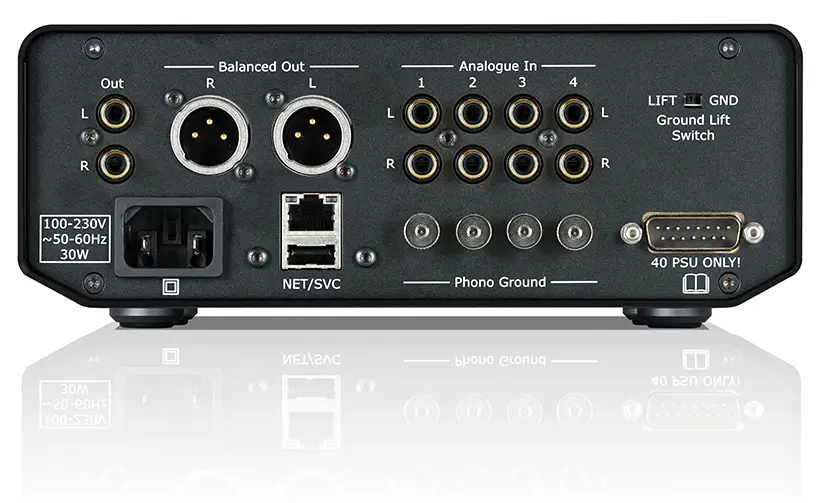
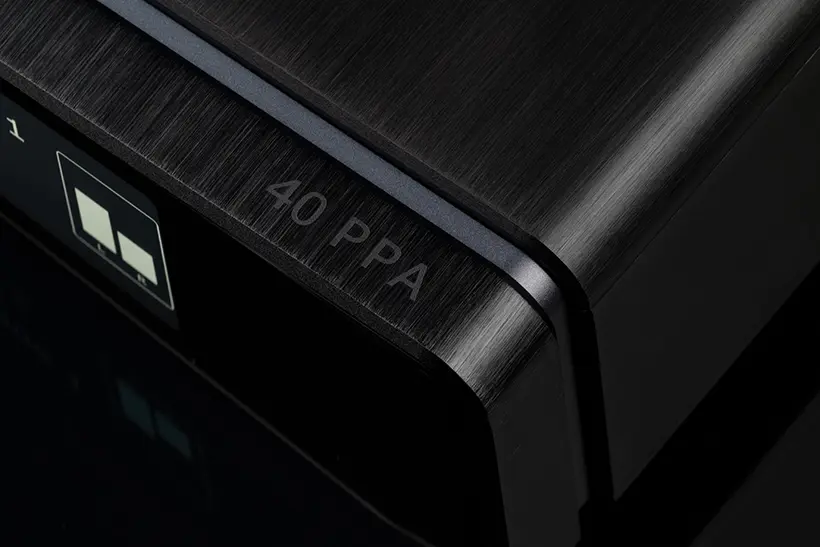
Challenging such heavy duty, copiously equipped behemoths, but for a somewhat more modest £2,000 and with an easier to house half-width form factor (attractively re-styled), is the Cyrus 40 PPA before you. It’s the latest fruit of a short but impressive phono preamp lineage that started in 2016 with the superb Phono Signature, handing over to the only mildly tweaked and still current Classic Phono. Benefitting from the new Cyrus 40 Series line-up’s updated look, build, internals and usability, the 40 PPA grabs the baton once more in pursuit of a still lower noise floor and a slicker, more satisfying user experience.
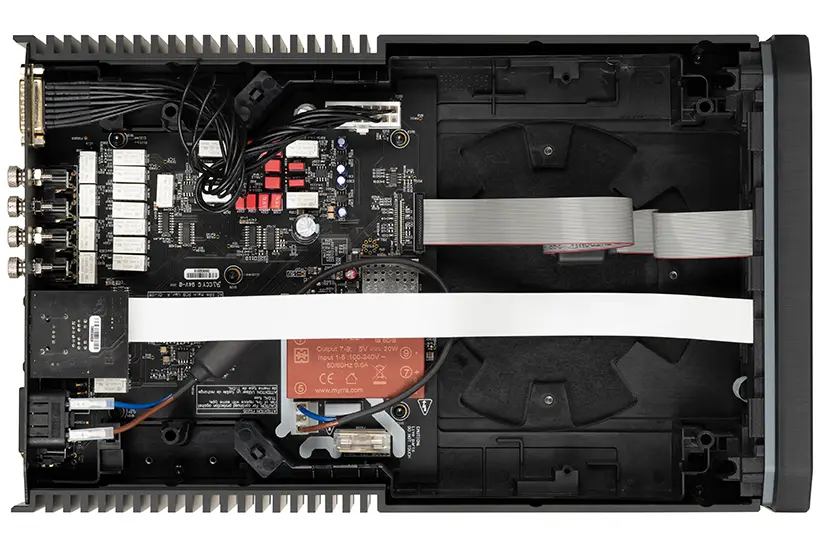
Cyrus has chosen several lanes to fulfil its goals with the 40 PPA. First, perhaps unsurprisingly given the company’s known design priorities, is power supply. A change of power supply to an encapsulated type as part of a new six-layer main board is claimed to reduce noise to 20 per cent of that of the previous four-layer board with a separate transformer. If that isn’t enough, there’s the usual Cyrus practice of providing the option of an external power supply to do the heavy lifting, leaving the unburdened internal supply to handle lesser duties. There are some other component and layout revisions but, at the back plate, remains a choice of RCA and XLR balanced outputs but no balanced XLR to sit alongside the four RCA inputs.
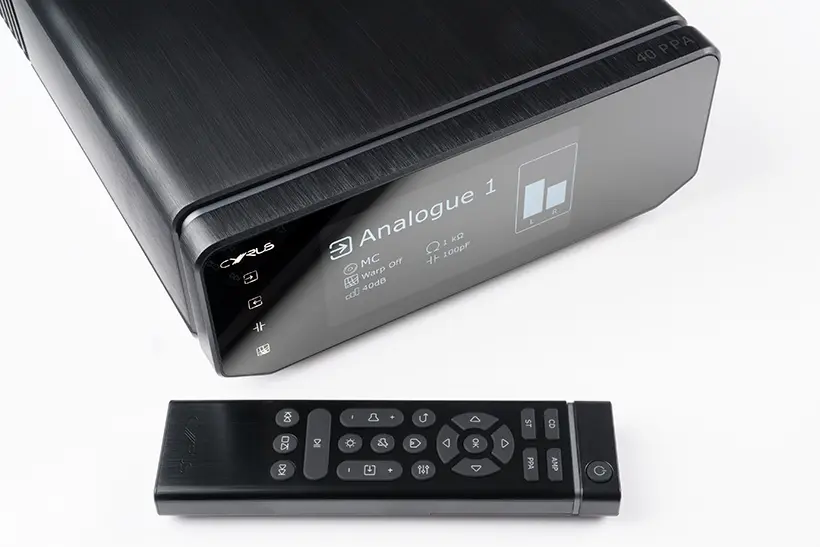
A little more radical has been the user interface rethink. Gone is the Classic’s tiny letterbox display which was almost impossible to read from a reasonable distance, replaced by a white-on-black screen on the 40 PPA that takes up much of the facia and even sports a dancing channel level graphic on the right side which is more cute than crucial though, if required, the whole front panel snaps to black after a few seconds, leaving just a small glowing white Cyrus logo top left corner (red in standby). Although the basic menu categories form a touch sensitive vertical stack on the left of the display, it’s easier to navigate everything from the well-designed remote.
Sound quality
The importance of a good phono stage? I’ve gathered a few star performers to see how the Cyrus 40 PPA fares, from the outstandingly able original iFi Audio Zen Phono at just £150, to Chord’s small but beautifully-judged £1,149 Huei to the extraordinary Tom Evans Audio Groove+ SRX Mk 2.5 which cost over twice as much as the Cyrus at £5,000 (when it was available) and has been custom impedance and capacitance matched to the Rega Ania Pro moving coil cartridge on my Rega Planar 6. I’m sticking with a low output MC for this review as it poses a far more demanding test than MM for a phono stage to get right and is most likely what potential PPA 40 customers are using.
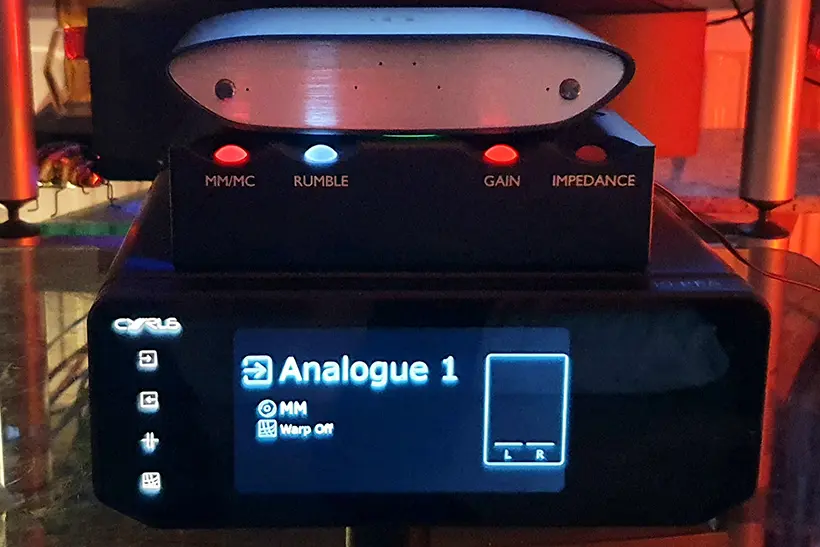
First to set the bar is the seminal version of iFi’s bargain Zen phono. It might look like a get-you-started trinket but, packed with quality components, it’s actually a tech spec monster capable of generating a prodigious 72dB of gain in low-output MC mode, this reducing to 48dB for high-output MCs and, of course, there’s an MM setting, too. The claimed input noise floor is a remarkable -151dBv.
The stat appears to be born out subjectively with notably dark backgrounds making the faintest details clear rather than merely hinted at. No, there’s nothing wrong with the little Zen’s powers of resolution, or its organisation and lickety-split timing come to that. On the contrary, spinning up Ben Sidran’s A Good Travel Agent from On The Live Side (what else) shows that, as well as a low-noise skillset, it’s in command of all the assets required to be a good phono stage. It begs an obvious question. Why pay more?
Fire-up the Chord Huei, though, and it quickly becomes clear there’s more to vinyl life than exceptional ‘by-the-book’ adherence. Whatever you think of the Chord’s quirky coloured orb control protocols, it has a few more strings to its sonic bow. Sidran and co sound a little larger and more effusive with an easy-flowing tempo and timbral warmth that’s simply more engaging and easier to relax into. I use the Huei quite a lot because it teams a high degree of transparency with a general sense of refinement, precision and control that finesses the P6/Ania Pro’s absence of an obvious sonic fingerprint to land with a little more weight and colour. I find it an appealing balance of virtues.
The Cyrus 40 PPA sounds different, palpably less interested in presenting a comfortably pliable sonic stance for one that’s spectacularly low in noise, high in detail and energy, wide in bandwidth and dynamic range and, well, hungry for whatever level of entertainment the cartridge can summon up. Undoubtedly an uptick of the Red Bull kind.
Switching to On The Live Side’s final track, the much more upbeat and fun Last Dance, and the 40 PPA is firing on all cylinders. What we have is a tight, together and fully lit performance from a Sidran ensemble including Billy Peterson on bass, Gordy Knudtson on drums, Ricky Peterson on synths, Steve Miller on guitar and Phil Woods on saxophone. As a result, Sidran’s all-star workout finale is peppered with Miller’s distinctive guitar plucks, chewy synth textures, deliciously deep bass that’s taut and articulate and rolling rhythmic drive. There’s clarity and grip, speed and dynamics – that satisfying sense you catch when it seems every member of the group is at the very top of their game and that the collective dynamic is even more rewarding than the so easily tracked individual parts. The cut connects absolutely on a pure performance level, sounding more vital and unfettered on the 40 PPA than it does with either the Zen or the Huei.
But not the Tom Evans Groove+ with its custom loading. A gold standard for focus, resolution, transient accuracy, imaging and dynamic freedom at any price, it takes everything the Cyrus can do and turns it up to a thrilling 11 and sometimes beyond. But the fact the 40 PPA is at least on the same page in these areas and, at the same time, sounds slightly fuller bodied is hugely impressive given its feature count and price.
Conclusion
The Cyrus Phono Classic may have been a tough act to follow but the 40 PPA does so effortlessly, delivering a step change in design and usability while nailing sonic improvements where they count most and where you’d have to spend heaps more to witness any meaningful improvement. A good phono stage? In all the best ways.