

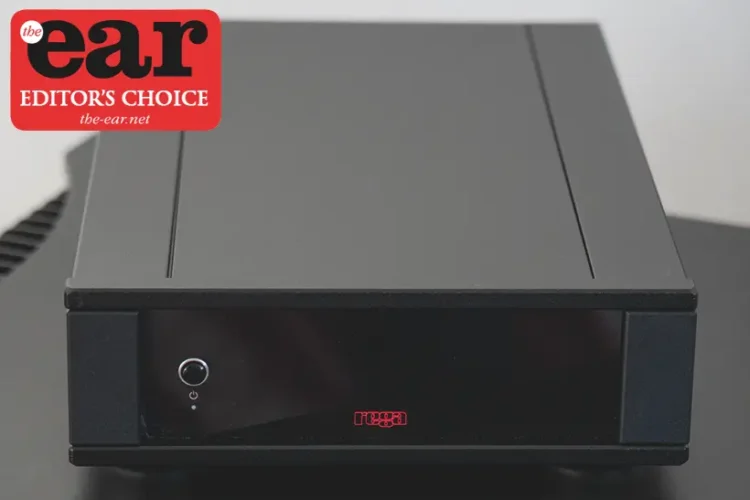
Rega Aos MC phono stage
Rumours had been circulating for a while about a baby Aura phono stage from Rega, a halfway house between the Aria MM/MC stage and the company’s range topper but it was still a surprise to see the Aos MC in finished form at the Bristol Hi-Fi Show in February. Rega’s Mercury and Solis pre/power amps were shown a good two years before they went into production, this time around the new arrival was kept under wraps until the last moment. Which probably means that Rega has a lot less hassle with reviewers and dealers asking when it’s coming every few months.
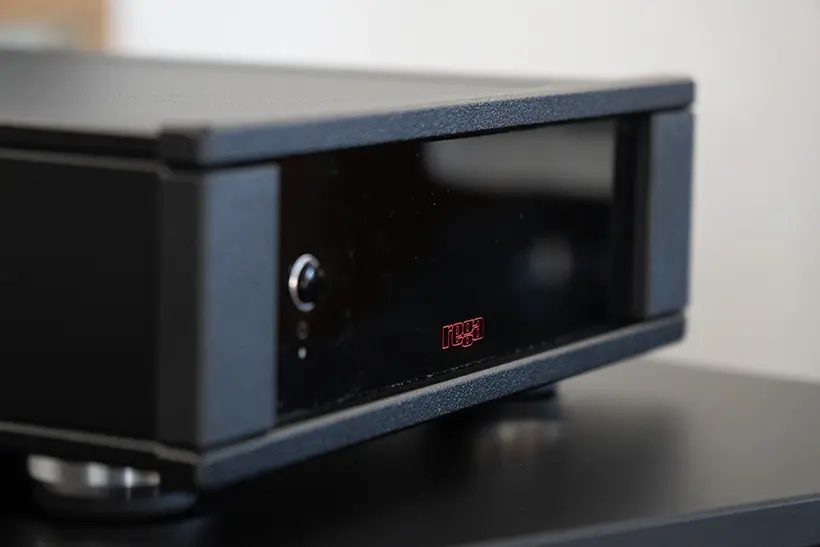
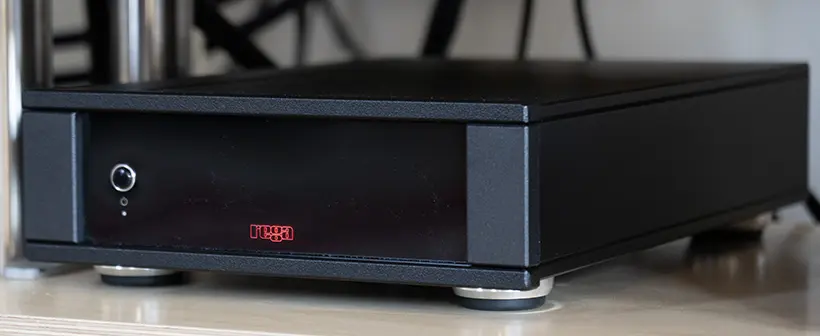
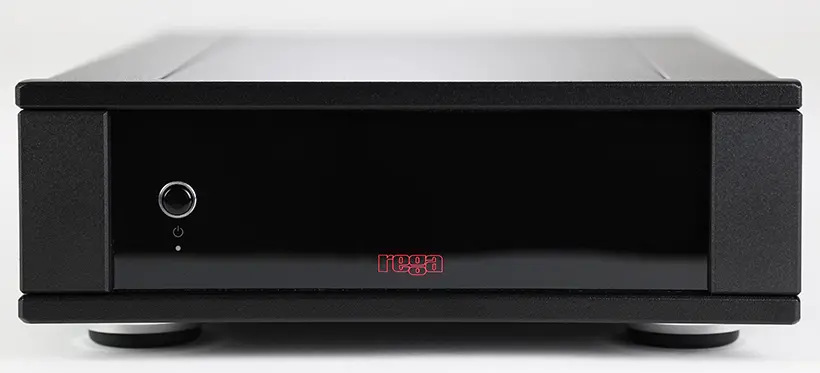
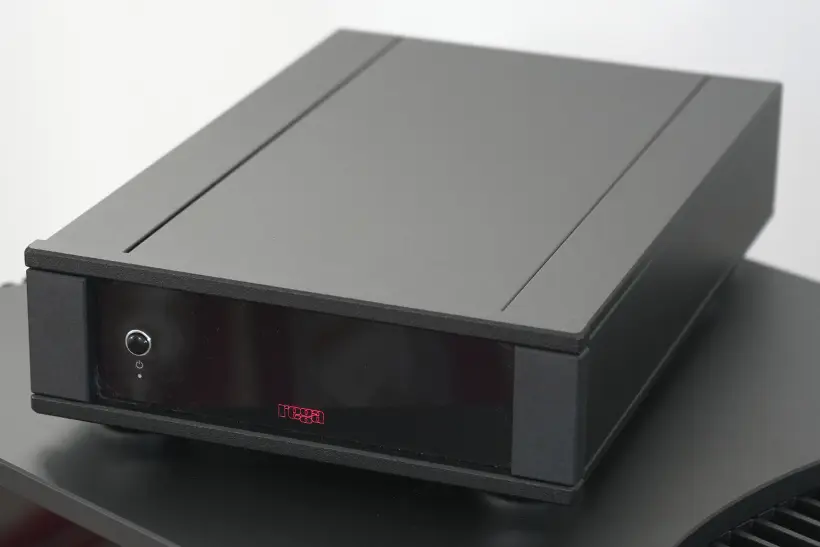
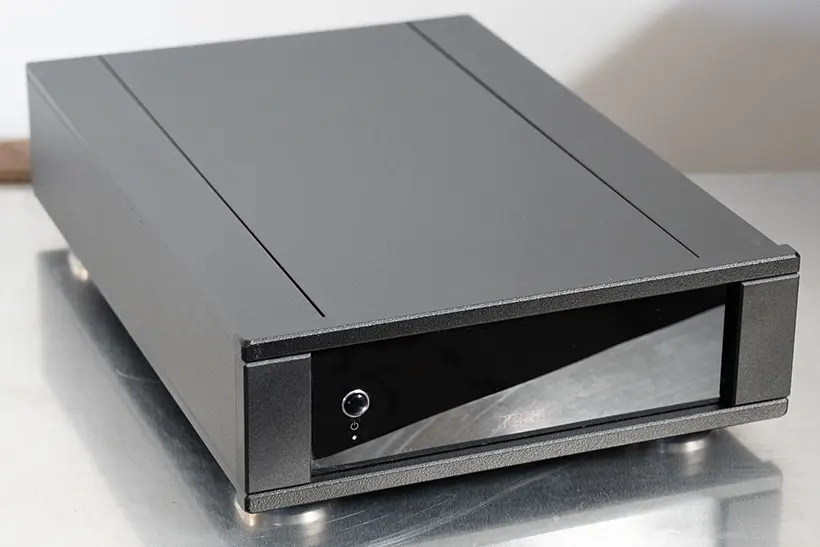
The £1,500 Aos MC looks almost identical to the Aria that’s no longer in production, so now there is an almighty gap between the Fono MC at £290 and this newcomer. I wouldn’t be surprised to see an Aos MM in the coming year. What’s significant about the Aos MC is that the only thing it shares with the Aria is appearance, under the skin this is effectively a cost engineered version of the Aura MC (£4,620).
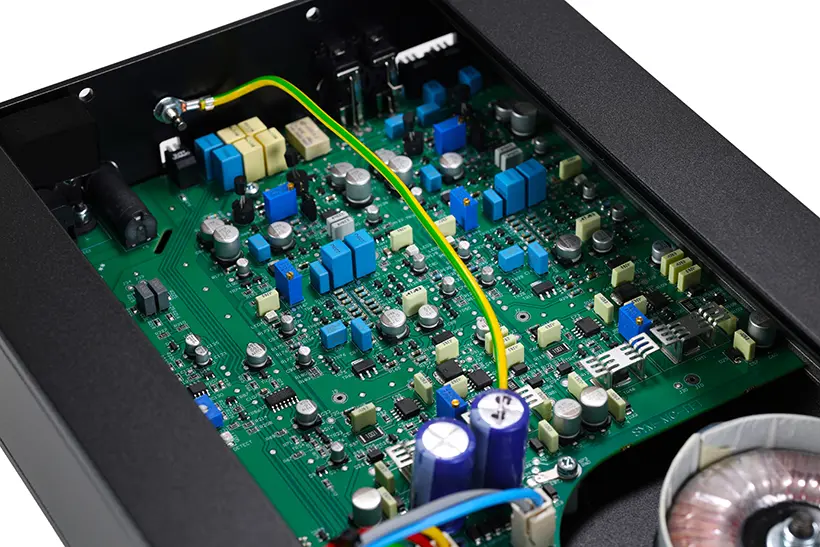
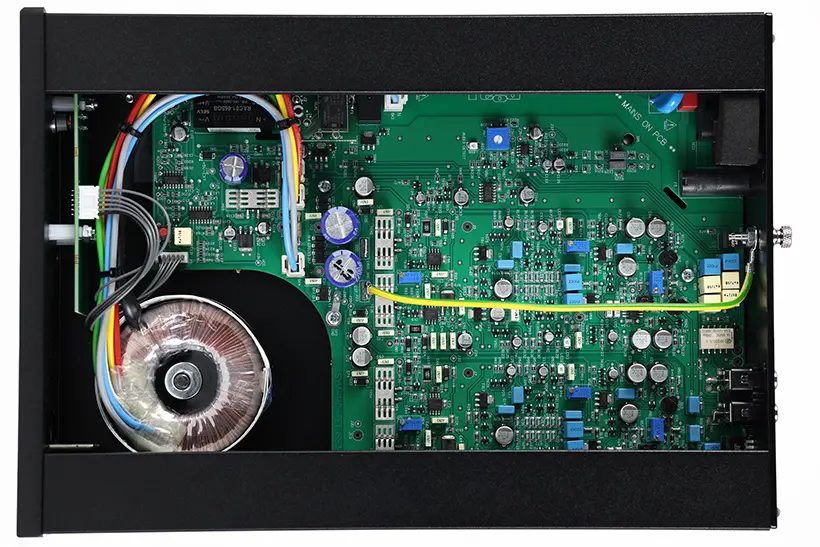
The circuit is fundamentally the same fully symmetric design but there are single rather than dual input FETs, less fancy capacitors and a smaller power supply. The casework is an obvious cost saving, the Aura has a heavyweight box, the Aos is more conventional by Rega standards. It also doesn’t have balanced outputs and there are fewer loading options, but in the most critical respects this a lot of audio electronics for the asking price.
Get loaded
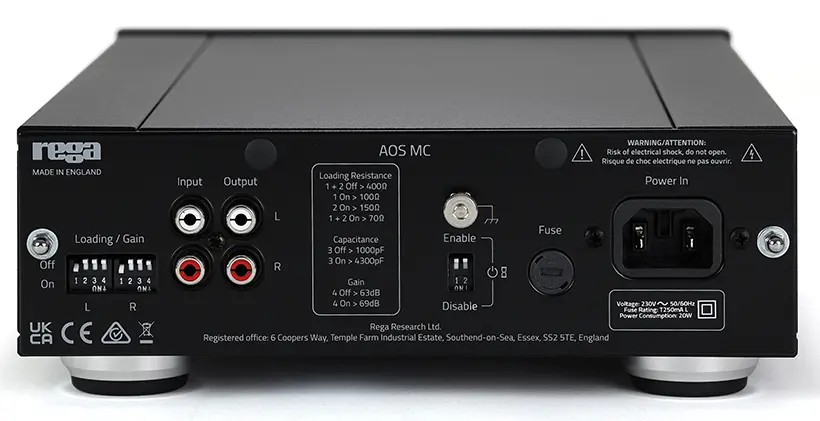
The loading options are much like those on an Aria with impedance and gain switches for each channel on the back panel. These are a little bit fiddly and require a small screwdriver for those of us with sausage fingers but this is not a process you need to go through any more often than you change cartridges, if then. The load settings extend to four resistance options from 70 ohms to 400 ohms and two capacitance options of 1000pF and 4300pF.
This is not a huge range but more than sufficient for the vast majority of moving coil (MC) cartridges, most of which are happy with 100 ohm resistance and 1000pF capacitance, only the more obscure and usually pricey require higher or lower impedance and many do not specify capacitance. Gain of 63dB or 69dB is selectable with Rega recommending the higher option for their own MCs. There are two other dipswitches on the back of the Aos MC and these are for standby, which kicks in after just over an hour of non use. This is legally required albeit not found on all audio gear as yet. It is also defeatable should you want to give the Aos a good warm-up prior to use. Finally, there’s a ground screw for earthing arms that have this option (Rega arms do not).
Under the lid the Aos MC is an all analogue phono stage as you would hope. There are a few companies incorporating DSP (digital signal processing) in phono stages in order to provide adjustability and tuning options but the whole point of record players is to keep the signal in the analogue domain from stylus to loudspeaker. Converting it to digital and then back again will always impact the result and generally not in a good way. Rega’s analogue all the way approach is the right one as they have proven time and again with previous designs.
Sound quality
I own a Rega Naia turntable with Aphelion 2 MC cartridge so this is what was used for the majority of my listening, I did however manage to fit a third party cartridge in order to ensure that the Aos MC is suitable for non Rega MCs. I left the load and gain as per factory settings as these are perfect for the Aphelion, and let the phono stage and cartridge warm up. It didn’t take long for it to become clear that this is a rather good phono stage, with low noise that makes for wide dynamic range from records that can provide it, Julian Lage’s Scenes from Above being one such that sounded particularly open and well defined.
I soon had an old favourite on the turntable in the form of Music for the Texts of Ishmael Reed by Conjure, a jazz tinged gem from the mid ‘80s. Here Lester Bowie’s vocals on Foolology were placed firmly in the room, the space in the studio being defined by the instruments and backing vocals behind it. The Aos MC is exceptionally good at separating elements in a mix and revealing how each has been treated, meaning that you can hear the reverb and harmonics of each instrument and voice if the recording is good enough.
The conga and trap drums on this piece really pop out of the speakers while the horns amp up the dynamics of an infectious rhythm, this thanks to the resolving powers of the Aos MC and the brilliance of the musicians involved. Bass is also very well served, with a wide variety of vinyl pressings serving up deep, rounded and well articulated low frequencies via its circuitry. The Aos MC has a lot of the calm authority of the Aura MC considering that it’s a third of the price, it also provides plenty of insight into everything you spin.
I got quite carried away with Keith Jarrett’s The Old Country (More from the Deer Head Inn) which is a heck of a recording from the early ‘90s, here the weight and body of the double bass come to the fore but not so as to obscure the piano which is solid in Jarrett’s inspired hands. More important than tone however is timing, this is spot on, the Aos MC balancing richness of tone against definition of tempo so well that this band’s rendition of Everything I Love really swings and Paul Motian’s drums sound uncannily real. This is a great recording but you usually need a rather more expensive phono stage for it to be rendered with so much vitality.
Recording quality is key with this as with any piece of audio gear, but the Aos MC is more sensitive than most and not easily swayed by music that has been created ‘in-the-box’ or manipulated too much – whatever the artist/engineer/mastering has put into the mix is pretty obvious. Live acoustic material like the Jarrett is more convincing than decent sounding electronica such as Djrum’s Under Tangled Silence, this sounds very good but suffers a little by contrast with more natural productions such as Bill Frisell’s Valentine. I might well have been swayed by a current enthusiasm for Frisell’s work that borders on the obsessive here, nonetheless his electric guitar sounds superbly expansive despite his spare playing thanks to the precision of touch and the heart behind the performance.
Bugge Wesseltoft’s Am Are combines acoustic and electronic instruments and the former steal the show thanks to their natural reverb, both saxophone and cymbals sound very real and alive via the Aos MC, high frequencies in particular having a body and presence that is hard to achieve. I put on another oldie in Tom Waits’ Raindogs and revelled in Marc Ribot’s electric guitar which doesn’t usually stand out so well, but the vocal does of course take the biscuit. Especially on the gem that is 9th and Hennepin, here Waits sounds visceral and real against the clangs and clonks of percussive backing, the whole thing producing a fabulously three dimensional acoustic picture of a darker, dingier world.
With a Transfiguration Proteus moving coil aboard the Naia the results were similarly inspiring, with superb projection of instruments that are full of tone colour and have loads of image depth, the harmonium on Raindogs sounding particularly real and the timing of the piece remaining in the premier league. I used this cartridge to contrast the Aos MC with a Trichord Delphini MM/MC phono stage that I used to use, this is probably 15 years old by now and no longer in production but its nearest equivalent is the Michell Apollo (£3,500) that was designed by the same man, Graham Fowler. The Delphini has a separate power supply and internal dip switches that can be set to the same impedance and gain as the Aos MC albeit gain is not specified in dB and the highest option proved to be greater than the 69dB of the Rega.
The vintage Delphini has a drier, brighter and faster presentation than the Aos MC which makes for a less relaxed but very engaging listen. Switching back to the Rega reveals that it is better at separating out the elements in a mix and has a smoother yet more precise delivery that makes the Trichord sound a little rushed. All in all it was a strong result for the Aos MC, it’s hard to compensate for the difference in age of course but the balance that the Delphini presented was pretty much as I remember it.
Finally I contrasted the Aos MC with the Aria, which is a bit unfair as the newcomer is nearly twice the price but it’s a benchmark for Rega users at least. You won’t be surprised to read that it was a walkover, the Aos MC clearly has a lower noise floor and this means that there is a lot more detail to be enjoyed, it also emphasised the characteristics identified above, namely excellent separation of instruments and voices. On Norah Jones’ rendition of Court and Spark made with Herbie Hancock and band, the voice envelope is much clearer and more definite, almost as if it is in a bubble in front of the band, which sounds much more dynamic and natural, not least the percussive elements and piano.
Conclusion
I had high hopes for the affordable Aura and the Aos MC has more than lived up to them. This is an extremely even handed and revealing phono stage and one that does thrilling things with the output of a decent moving coil cartridge. I particularly like the way that it reveals so much without resorting to a forward leaning balance, this can sound fast and exciting but can also be too much for many recordings. The Aos MC has perfect timing and delivers the musical goods in a compelling fashion, if you really want to know what’s cut into the groove wall take your favourite vinyl down to your local Rega dealer at the earliest opportunity.
Pros
Excellent clarity and separation of instruments and voices, revealing fine detail in well-recorded vinyl.
Very low noise floor, allowing wide dynamic range and subtle musical nuances to emerge.
Balanced, natural presentation that avoids an overly forward or aggressive sound.
Superb timing and rhythmic coherence, giving music strong sense of swing and flow.
Deep, articulate bass with good weight and control.
High frequencies have body and presence without sounding thin or etched.
Derived from the much more expensive Aura MC design, offering strong value for money.
Works well with both Rega and third-party moving-coil cartridges.
Straightforward loading and gain options that cover the needs of most MC cartridges.
Cons
Limited loading options compared with some competing phono stages.
Rear-panel dip switches are fiddly and require a screwdriver to adjust.
No balanced outputs.
Slightly more revealing of recording quality than some alternatives, which can expose weaknesses in poorer productions.