

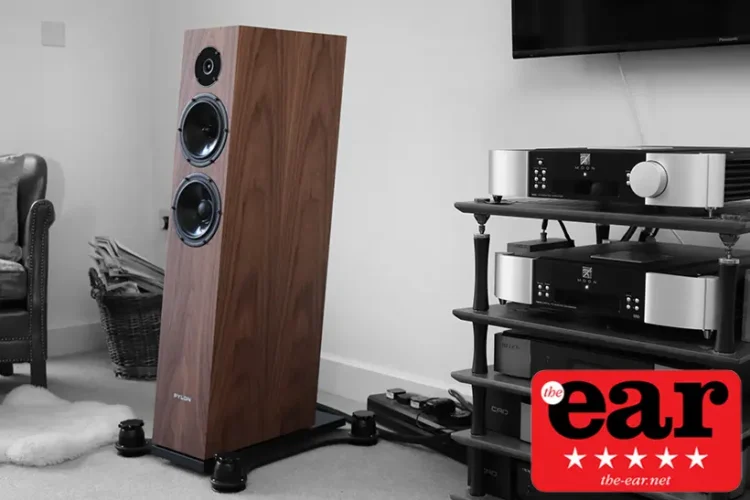
Pylon Audio Diamond 28 MkII speakers
To stand out in any crowded marketplace, a manufacturer needs to produce something that offers something substantially different from the norm. There is certainly no shortage of talented speakers available at around the £3-£4k mark, however, few of them come with a drive unit specification and a cabinet of the quality of the Pylon 28 MkII.
The Pylon brand was founded in 2011 by lifelong friends Mateusz Jujka and Mikolaj Rubeńczyk. Their factory in Jarocin, Poland, includes an anechoic chamber and employs approximately 50 people. The company reportedly supplies OEM cabinets to several speaker manufacturers.
The speakers we are looking at here are from Pylon’s Diamond range, which represents the brand’s third tier, sitting above Pearl and Opal ranges. The Diamond 28 MkII is Pylon Audio’s second-largest floorstanding speaker, with a cabinet and drive units of a quality that would not look out of place in a loudspeaker costing more than twice the £3,295 asking price. The question is, how do they perform?
Design and build
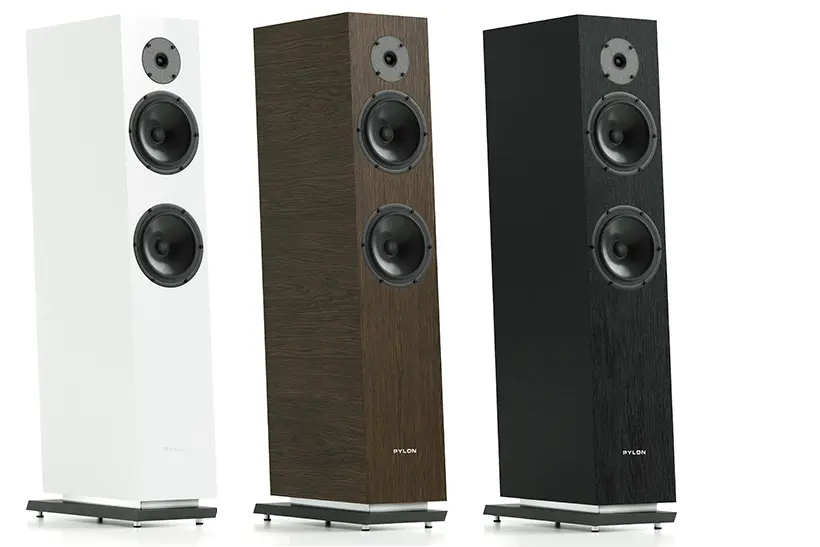
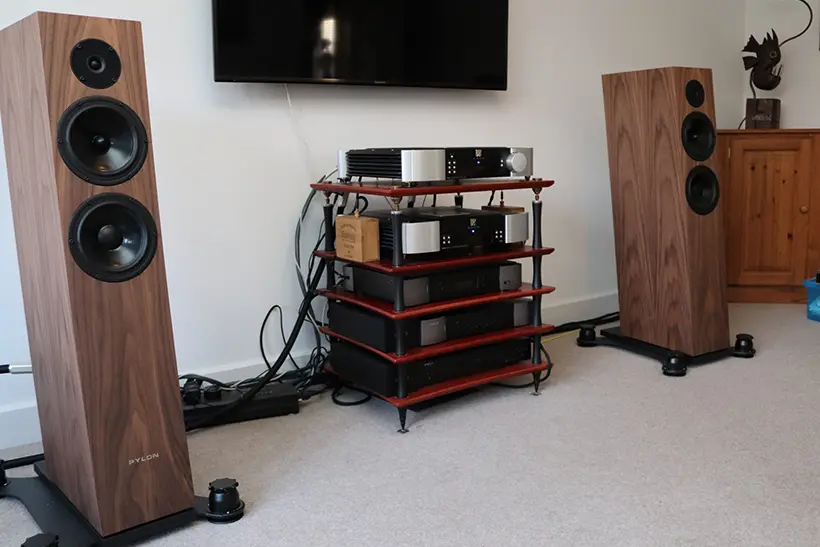
As we have established, the build and finish of these speakers is exemplary. My samples are in an attractive American walnut-veneered MDF, but an extensive array of alternative finishes is available, including RAL colours. The main cabinet body sits on a plinth that slightly overhangs the front and rear of the cabinets. The plinths accept spikes or your choice or threaded isolation devices. The Diamond 28 MkIIs fitted perfectly on my Townshend Seismic Podiums, so there they remained.
The Pylon Diamond 28 MkII has a significant lean back, 7 or 8 degrees would be my unscientific guestimate. It’s a reflex design with dual rear ports. Input is via a single pair of decent-looking binding posts which accept banana plugs and spades. I have heard less of a ‘ring’ from speaker cabinets following the knuckle test, but not from a floorstander at anywhere close to the Diamond 28 MkII’s cost. The cabinet is internally braced and damped with sheep’s wool. A set of magnetic grills is supplied, but I did not feel the need to unpack them.
Like many of the speakers I have especially enjoyed listening to at home, the Diamond 28 MkII is a 2.5-way design. The bass and bass/mid are 6.5 inch drivers from SEAS. The soft-dome tweeter is from Scanspeak, which, as with the other drive units, has been modified by Pylon’s engineers. The Pylon Diamond 28 MKII is undoubtedly one of the best-looking speakers to have graced my room recently. Some visitors have commented that they remind them of older PMC models, though without the front ports. They look stunning to these eyes regardless.
Sensitivity is quoted at 89dB at 4 ohms, which explains why my Moon 600i, which doubles its output into 4 ohms, produces a decent output at lower volume settings than is typical. However, this speaker does not need to be played at high levels to thrill. I found myself listening at relatively low levels and obtaining involving and entertaining results. The 4 ohm load means they require an amplifier capable of delivering a strong current, although not necessarily a high power output. The frequency response is quoted as 34Hz to 20kHz. The lower figure is a good choice, as in my experience, speakers in this class that delve to lower depths tend to do so at the expense of control.
Voiced for enjoyment
Some speakers take time to work their way into your psyche, whereas others form a more instantaneous connection. The Pylon Diamond 28 MkII falls into the latter category. It’s a speaker that makes you forget about hi-fi and enjoy the music. Energy levels are high here; they possess a strong sense of verve and excitement. The bass, whilst lacking in the very lowest octave, is weighty and punches hard, with a great sense of drive and rhythmic cohesion.
The Diamond 28 MkIIs track dynamic changes particularly well and produce a large-scale image. I have heard better soundstage depth, height and accuracy of placement from more expensive models, but the soundstage is effortlessly wide and projects forward extremely well. The music emitting from the Diamond 28 MkII sounds incredibly spacious and open, allowing me to hear into recordings like few others at this price point.
Detail levels are impressive, and the speaker proved transparent enough to reveal changes made elsewhere in the chain, which is very handy for us reviewers. The occasional downside was that they told me a little more than I wanted to hear from poor recordings – Bruce Springsteen’s recent protest song, Streets of Minneapolis (Qobuz 24/96) being a good example of this, making it challenging to listen to the whole track. To be fair to the Pylons, I played this track through another pair of speakers that retail for over twice the price of the Diamond 28 MkII, and they were only marginally more listenable – I do wonder why they bothered to release it in a high-resolution format. The tweeter’s resolution means that great recordings are revealed as such; even close-miked vocals, such as David Sylvian’s on Secrets of the Beehive or Cowboy Junkies’ The Trinity Sessions, were reproduced without distortion or sibilance.
This is a musical speaker that does the trick of making instruments sound like humans are playing them. By this, I refer to that special quality of reproducing the impression of movement. However, whilst they convey immediacy well, they perhaps lack the last ounce of timing insight that separates very good musicians from the truly gifted. The Diamond 28 MkII is a speaker that needs a bit of space, both behind and between the drive units and the listener. The top end is clean and sweet but perhaps works best in a well-furnished room, with the listener in the mid- to far-field.
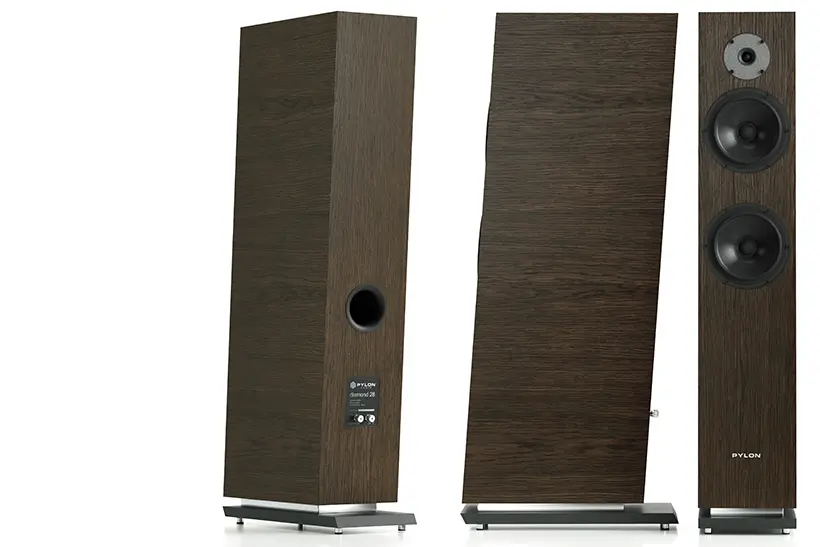
Now let’s return to the rear ports. They produce a strong output, so placing them about 60cm from the wall would be optimal for listening at higher volume levels. With the speakers in my room’s usual sweet spot, the bass could prove overpowering when playing music with a strong bass output, even with the Townshend platforms working their magic. My system does produce a lot of bass, however, so experiences may vary. Either way, bringing them out further into the room did the trick and brought the low frequencies nicely under control, but resulted in them being closer than ideal to my listening seat – room treatment would perhaps solve this issue in my setup.
The Diamond 28 MkII’s resolving top end made easy work of reproducing recording venue acoustics. I particularly enjoyed their rendition of David Sylvian’s The Boy With the Gun, from his Secrets of the Beehive album (CD rip). Perhaps there was just a little too much added sheen for it to sound completely natural, but the Diamond 28 MkII painted a beautiful picture here. The Pylons handled Dead Can Dance’s Into The Labyrinth (SACD rip) particularly well. The acoustic of the church, in which the album was recorded, is revealed in its full glory, albeit with a little added colour, but not enough to detract from my enjoyment. Equally impressive was the reproduction of the album’s centrepiece, Toward the Within; here, the Diamond 28 MkII’s verve and dynamism provoked some questionable ‘dad dancing’ from yours truly.
David Sylvian’s debut album, Brilliant Trees (CD rip), can sound a little shut in on some systems, at least in the case of the CD master I took my rip from. Again, the extra pep these speakers provide proved just the tonic, making it an enthralling listen. As I type the final words of this review, my wife is watching a crime drama on TV, with the sound routed through the system. I’m assuming the feed is a high-rate MP3 or similar, but the soundtrack is particularly dynamic, and the Diamond 28 MkIIs are making the most of it. This speaker’s speed and weight can make you jump out of your skin during action scenes. I’d wager that the full 5.1 Diamond Series is a killer home cinema setup.
Conclusions
The Pylon Diamond 28 MkII is, above all, a big, bold and fun-sounding transducer. It may not be your first choice if accuracy and neutrality are your goals, and it is best paired with smoother-sounding electronics, such as my Simaudio Moon kit. However, these speakers wear their hearts on their sleeves and know how to boogie. The accompanying sweetness means that the Diamond 28 MkII’s slight treble lift rarely proves intrusive, although I did get best results when sat further back from them than I would typically do. That said, the upside is a sense of spaciousness and a soundstage that projects like few others in its class, with thrill power to match.
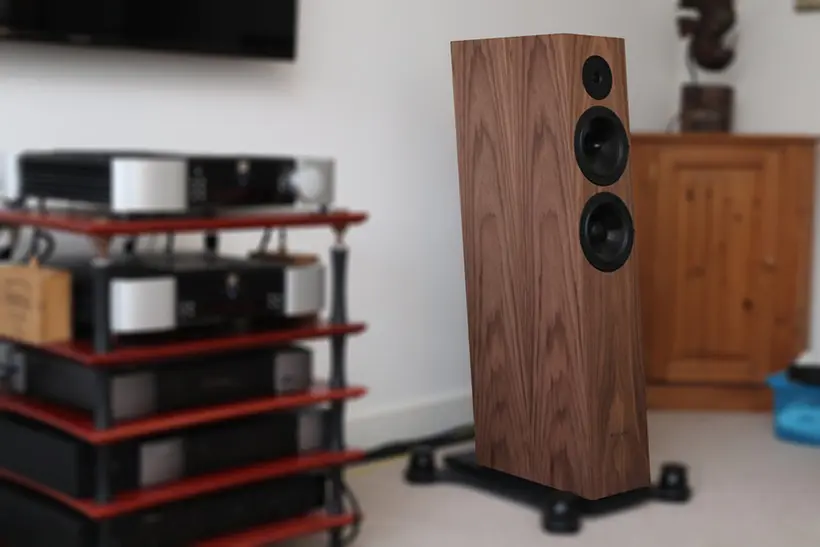
The build quality and finish of these speakers is a cut above what I have come to expect at, or near their price – it is not hard to see why other manufacturers value Pylon’s OEM cabinet work. In terms of visual presence, they truly make the cut.
The Pylon Diamond 28 MkII is a fantastically built, great-looking, fun and funky-sounding addition to a crowded market. All speakers impose their own character upon the music to some extent, but when it’s this much fun and spacious-sounding, it’s easy to forget about neutrality and enjoy the ride. If you are the after the kind of speaker that delivers the full weight and body of the musical performance, which can make every listening session a thrilling experience, give the Pylon Diamond 28 MkII a try.
Pros
Exceptional build quality and finish for the price; cabinetry comparable to speakers costing far more
Wide choice of finishes, including real wood veneers and RAL colours
High-quality drive units (modified SEAS bass/mid and Scan-Speak tweeter)
Big, bold and engaging sound with strong energy and excitement
Weighty, punchy bass with good rhythmic drive
Excellent dynamic tracking and sense of scale
Spacious, open presentation with a wide, forward-projecting soundstage
High level of detail and transparency; reveals changes in upstream equipment
Sweet, clean treble with no obvious sibilance on good recordings
Makes music sound lively and ‘human,’ with a strong sense of movement
Performs well even at relatively low listening levels
Visually striking design; strong room presence
Well suited to home cinema thanks to speed, impact and scale
Strong value for money given specification and finish
Cons
Bass does not extend into the very lowest octave
Rear ports can produce too much bass in some rooms unless carefully positioned
Needs space behind and in front of the listener; not ideal for small rooms or near-wall placement
Slight treble lift can add a touch of extra sheen, reducing ultimate naturalness
Can sound a little coloured rather than strictly neutral
Reveals flaws in poor recordings, which can make them less enjoyable
Requires an amplifier capable of delivering strong current (4 ohm load)
Best results achieved when listening further back than normal
Not the best choice for listeners prioritising strict accuracy and neutrality