


Vitus Audio RI-101 MkII streaming amplifier
The Danes appear to have a knack for producing great hi-fi. Vitus may be a niche brand for some but for those who have experienced the brand’s products, it is a name often mentioned in hushed tones. Indeed Vitus’s products, and particularly their range of amplifiers, are considered by many in the know to be some of the finest available. However, in Vitus terms, the RI-101 MkII is the baby in the Reference range. The Signature and Master ranges that sit above include some genuinely dream-worthy DACs, CD transports, amplifiers and phono stages.
You can order the Vitus RI-101 MkII in base form for £17,000, the streaming module adds £4,500, so we are looking at a streaming amplifier which retails for £21,500, thus the RI-101 MkII represents a serious investment. Still, if it proves capable of delivering its maker’s promise of producing true reference-level performance into practically any loudspeaker on the market, then perhaps the entry fee is acceptable.
The Vitus RI-101 MkII is an evolution of the RI-100 amplifier, which was launched in late 2011. Hans-Ole Vitus tends to tweak his designs during their production cycle; therefore, a change of model prefix suggests a significant advance in performance. As with the earlier incarnations, the RI-101 MkII produces 300 Wpc into 8 Ohms, which doubles into a mighty 600Wpc into 4 Ohms. So it is undoubtedly a powerhouse, but as you will read, there is far more to this design than pure muscle.
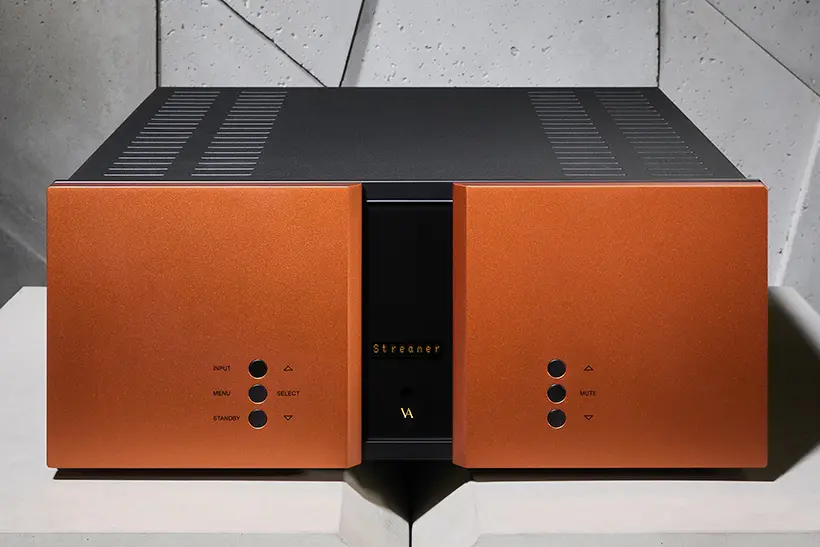
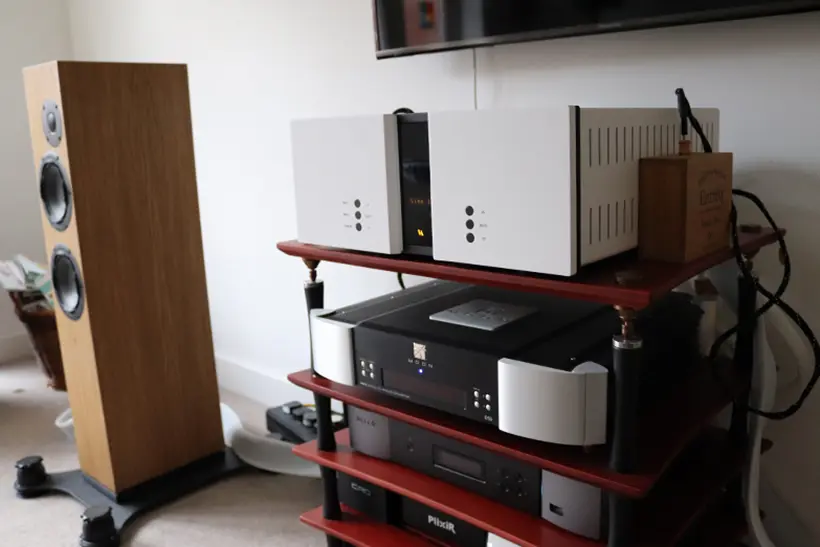
This amplifier is described as a Class A/B design, with the first eight watts per channel in Class A. The RI-101 MkII runs warm, although not to the extent that it can moonlight as a heating appliance. Indeed, I got to enjoy to it on some pretty hot days over the summer, and at no time did heat become an issue. This amplifier’s circa 40kg girth did cause me to put some thought into how to go about lifting it onto my Quadraspire rack. However, my son and I gave each other a pat on the back after accomplishing this without too many expletives being muttered.
Build, design and features
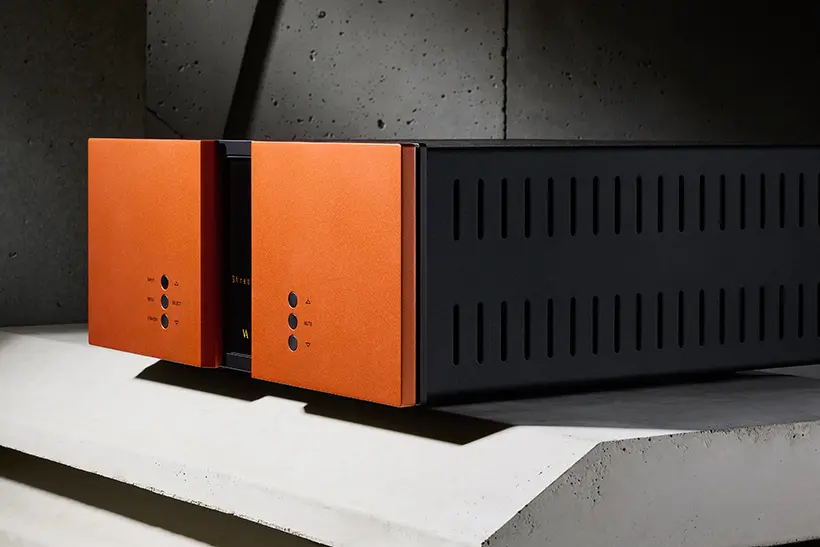
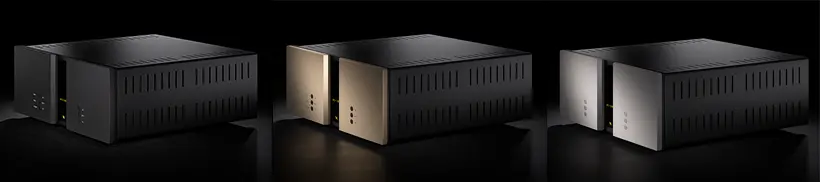
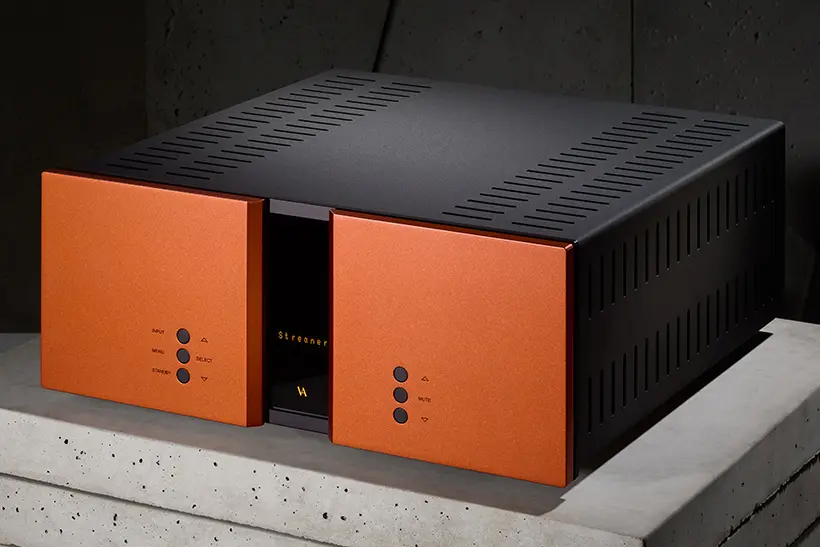
The RI-101 MkII follows in the Vitus tradition of being built to battleship standards. On top of that, it is an eye-catching individual design. My sample is in white, which will suit some rooms and setups to a tee, but the black looks better to my eyes. You can also choose silver for the standard price. Custom colours are available for a £2,000 premium. I have to say that of the three options listed, the Titanium Orange looks devilishly tempting.
The lack of a rotary volume control proved initially disconcerting, but I quickly got used to it. The attenuator itself is a resistor ladder affair, with an individual resistor path for each level. This type of volume control is hypothetically superior to a potentiometer, but it does result in a stepped effect. To avoid unwanted switching noise, the circuit momentarily mutes between each step, but the effect is so fast as not to prove bothersome. The manufacturer’s claim of a linear performance was backed up by a notably consistent performance across a range of volume settings.
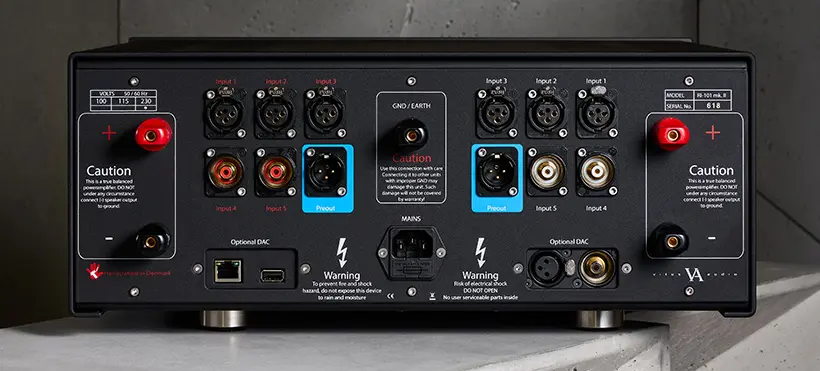
Among other options its microprocessor-control allows you to reconfigure input names, volume match inputs and set up a home theatre bypass. There’s a small display on the front panel, which I could just about read from my listening seat.
I have to say that after having lived with the likes of the Moon North 641 integrated, and indeed the Moon 791 preamp, the supplied, previous generation Apple TV remote doesn’t cut it in an amplifier in the RI-101 MkII’s price bracket. Whilst it would not be a deal breaker, this device is at odds with the high-end feel of the amplifier itself. As we went to press, we were informed that Vitus are now shipping the RI-101MkII with an updated remote. From the photos provided by the distributor, it looks to be a substantial improvement over the Apple unit supplied with our review sample, which is great news.
Rear RI-101 MkII’s panel connections are from the top drawer and have an impressively solid feel to them. The number of XLR inputs suggests that Vitus prefers this connection, but RCA inputs are also provided. Previous versions of this amplifier included a USB input, but this one, fitted with a streaming board, only includes AES, SPDIF and ethernet inputs. From a reviewing perspective, this made it tricky for me to separate the performance of the DAC itself from that of the streaming section, as my Melco server only outputs to ethernet and USB connections. There is also a ground/earth connection, which surprised me, considering there was no onboard phono input, but this could prove useful for experimentation with grounding.
Heavyweight performance
I had been anticipating great things from this amplifier based upon its reputation and favourable comments from a couple of dealer friends, who have told me it is the best-sounding amplifier they stock at this price point. I have to say that, having spent a good few weeks with this beast, it is hard to imagine there being a better all-rounder in or even close to the RI-101 MkII’s market segment.
Music is delivered with a sense of absolute control and authority. Subjectively, the frequency response is impressively flat, with no exaggeration of particular tonal ranges. For sure, it sounds like a solid-state amplifier in that there is little, if any, added warmth or roundedness of the frequency extremes. You would never call it cold or sterile, however, there’s an uncanny fullness to the music and absence of exaggeration of the leading edges, which helps make those less-than-stellar recordings tolerable.
Desired attributes, such as soundstaging, dynamics, transient response, instrumental timbre, bass weight and musical colour are all first-class. An amplifier with the speed and control of this Vitus means that it is always ready for the next crescendo or indeed change of tempo. Music has a calmness about it, but at the same time, it is full of life, vibrancy and rhythmic drive. With 300 Wpc on tap and impeccable current delivery, the RI-101 MkII will never run out of steam. An amplifier with the Vitus’s speed and bandwidth means that it can keep up with whatever the music throws at it. This means that it never becomes harsh or unpleasant to listen to, hence listeners can enjoy recordings that are all but intolerable with lesser amplification.
Now let’s talk about the soundstage. Many hi-fi components impress by throwing a larger-than-life soundstage, often sounding airy and spacious across a range of recordings. This, let’s call it attractive colouration, usually comes at the expense of other aspects of reproduction, often musical timing. The RI-101 MkII’s soundstage begins further behind the speakers than other amplifiers I have had at home, with the image expanding forward only when this information exists within the recording. This amplifier places instruments at a precise point within the soundstage in terms of height, depth, as well as laterally and sounds airy and spacious only when such information is in the recording. The presentation is neither blurred nor drawn with a scalpel, simply natural and full of authority.
Weather Report’s Heavy Weather (DSD Qobuz download) has a fantastic dynamic range, but the recording’s incisive nature can trip up lesser systems. Here, the RI-101 MkII allowed me to enjoy the fireworks, but the character of the presentation did not change during louder passages, and the soundstage retained the correct proportions throughout. On track two, A Remark You Made, the drum kit was positioned well behind the rear wall of my listening room. Jaco Pastorius’s bass and Wayne Shorter’s tenor sax were placed towards the front of the soundstage, marginally extending forward of the speaker cabinets.
As a juxtaposition, I next played the track Small Hair Dune, from David Torn’s album Polytown (16/44 download). This amplifier immediately revealed the studio processing used to present the drum kit in a larger-than-life manner, but the drums were still behind the speaker’s plane. This time, the bass and lead guitars were pushed further into the room. The Vitus’s grip, speed and dynamics made this track a thrilling ride.
Interestingly, the distributor encouraged me to experiment and compare results between the RI-101 MkII plugged into my usual mains distribution block and directly into the wall output socket. My initial reaction was that the music sounded more spacious and sweeter via the mains block. It then dawned upon me that these subjectively attractive attributes were at the expense of immediacy and engagement, and so were likely a colouration. This proved to be a real eye opener, and it is an experiment I shall be repeating in future as part of my evaluation of amplifiers.
Bombastic, hard rock and metal through less resolving systems can make for a hard listen. My son has been attempting to play Metallica’s Orion (Master of Puppets 24/44 download) on the bass. Cliff Burton’s bass guitar sounds somewhat lean, which represents a production style typical of this genre, aimed at helping the guitars and drums cut through the mix more savagely. The Vitus RI-101 MkII did not exaggerate the low frequencies in any way, but it gave the instrument the required speed and definition for us both to appreciate what a loss Cliff’s death was to the world of rock music.
Despite this amplifier’s abilities with larger-scale music, it is equally adept with more intimate recordings. Female vocals, in particular, sound utterly natural and when it’s one of the great ones, such as Joni Mitchell, suitably emotive as well. Her vocals on the impeccably recorded Turbulent Indigo (CD rip) are given the required space to connect directly to your heart and soul.
The lack of colouration, combined with the sheer resolution on offer here, results in recorded acoustics being reproduced faithfully. I often use my DSD version of Dead Can Dance’s Into The Labyrinth as an ink test for this aspect of reproduction, as the recording has plenty of it to reveal. Through the Vitus, there’s a lack of exaggeration to the room’s acoustic that makes it palpable. Equally, live recordings work particularly well. CSN&Y’s Four Way Street (CD rip) peels back the years and puts me in the same hall as the band. Not only am I given the immediacy, I am given texture and precise soundstage information that means I can almost see the performers.
For the majority of the review period, I listened to CD-quality and hi-res files via my Melco N1, Moon 780D DAC, a pair of Oephi Transcendence 2.5 speakers and their Immanence cables. I often turned to the RI-101 MkII’s on-board streamer when listening to Qobuz streams. This digital source matched the rest of the amplifier’s character well, sounding clean, natural and with excellent timing.
Direct comparisons between the internal DAC revealed a slight smearing of fine detail and a minor reduction in soundstage width. Still, considering that my now-discontinued Moon DAC formerly retailed for almost the same price as a Vitus RI-101 MkII sans streaming board, this is to be expected. To put things in perspective, streamed music via the Vitus RI-101 MkII’s internal DAC/streamer proved significantly more enjoyable than via my Moon 780D and Moon 600i amplifier.
Final thoughts
The Vitus Vitus RI-101 MkII would undoubtedly be right at the top of my list if I were searching for this type of amplifier. The entry fee is far from insignificant, but this amplifier represents excellent value for money in terms of performance and build quality. It does not put a foot wrong performance-wise and I have heard very little that gets close to it sonically. In terms of soundstage, dynamics, speed, accuracy and listener involvement, it bows down to only the most costly components available, doubtless including those from the upper echelons of Vitus’ portfolio.
If you are in the fortunate position to purchase this amplifier and build a system around it, the Vitus RI-101 MkII will put a smile on your face on a daily basis. If there is a better amplifier available for similar money, then I have not heard it.